Thanks for your support! If you make a purchase using our links in this article, we may make a commission. And, as an Amazon Associate, I earn from qualifying purchases. See the full disclosure here.
Published May 6, 2022 | Last updated September 3, 2026
There is no single best place to buy an RV.
The best place depends on what matters most to you: price, selection, service after the sale, convenience, or negotiating leverage.
Susan and I have bought RVs two very different ways. We bought our Class C from a private seller on Facebook Marketplace, and we bought our Class A from a dealership. Both experiences went well.
That is why I would not tell you that private sellers are always better or dealerships are always safer. I would choose where to buy based on how you travel, how much help you need, and how prepared you are.
What Is the Best Place to Buy an RV?
A local dealer can be a great choice if you camp close to home and value a nearby service department.
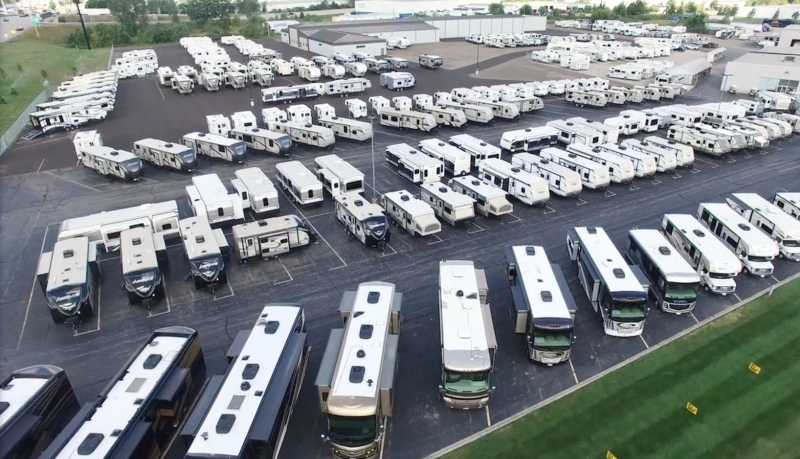
A large or out-of-state dealer can make sense if selection and price matter more than having the selling dealer nearby.
An RV show can be an excellent place to buy if you already know what you need and are ready to compare competing RVs and dealers.
A private seller can be a good option if you are comfortable handling the inspection, title work, financing, and negotiation yourself.
Online marketplaces are great for expanding your search and comparing prices, but the website is only where you found the RV. You still have to evaluate the seller and the RV itself.
1. Buying From a Local RV Dealer
A local dealer can be a strong option if you expect to camp mostly near home.
The biggest advantage may not be the sales department. It may be the service department.
If you have a warranty issue, slide problem, appliance failure, or another repair, having a good service department nearby can be valuable.
But I would not buy locally just because the dealer is close. Read the service reviews first. A dealer five miles from home with terrible service is not much of an advantage.
2. Buying From a Large or Out-of-State Dealer
Large dealers can give you more inventory to compare and sometimes more competition on price. That can matter a lot when you are trying to find a specific floor plan.
This worked fine for us because we travel much of the year and are rarely near the dealer where we bought our Class A anyway.
For us, it mattered more to get the right RV at the right price than to have the selling dealer close to home.
If you buy far from home, ask yourself how you will handle warranty and repair work after the sale.
3. Buying at an RV Show
I think RV shows can be an excellent place to buy an RV, but only if you are prepared.
Susan and I have attended RV shows for years, and the biggest advantage is how many floor plans you can compare in a short amount of time.
You can walk out of one RV and into another while the differences are still fresh in your mind. You may also have multiple dealers competing for your business.
But I would not let a show price rush me into buying the wrong RV.
There is no sense getting a great price on the wrong RV.
If you are still figuring out what you need, use the show to learn first. Then buy when you are ready.
4. Buying From a Private Seller
We bought our Class C from a private seller on Facebook Marketplace, and that purchase went well.
A private sale can give you direct access to the owner, which is valuable if they have maintenance records and can explain the RV’s history.
You may also avoid some dealer fees and have room for straightforward negotiation.
But you have to verify the title, handle payment safely, arrange financing if needed, and make sure the RV is inspected before money changes hands.
I would never assume a private seller’s RV is safe just because the person seems honest.
Our guide on how to buy a used RV from a private seller goes deeper into that process.
5. Facebook Marketplace, RV Trader, and Other Online Marketplaces
Online marketplaces are great for finding inventory. They are not a substitute for due diligence.
Facebook Marketplace worked for us when we bought our Class C. Sites like RV Trader can also make it easier to search nationally and compare asking prices on similar RVs.
I would use online listings as research tools first and buying platforms second. They can help you understand what the real market looks like before you negotiate.
6. Should You Buy Near Home Just for Service?
This depends on how you travel.
If you mostly camp close to home, buying from a local dealer with a highly rated service department may be worth paying a little more.
Our situation is different. We are on the road much of the year and are rarely near the dealership where we bought our Class A.
So dealer proximity did not matter nearly as much to us. What mattered more was having repair coverage that could travel with us.
Why Mobile RV Repair Coverage Matters to Us
We have an extended warranty through Wholesale Warranties.
One reason it works for us is that mobile RV technicians can be used for eligible covered repairs, subject to the contract terms and authorization requirements.
That fits the way we travel much better than relying on the dealership where we bought the RV.
Repairs submitted under our warranty have totaled about $8,479.54, and Wholesale Warranties has paid about $7,279.54 after our deductibles toward those covered repairs.
If you travel far from home like we do, ask yourself this before you buy: If something breaks 1,000 miles from the selling dealer, what is my plan?
If you want to compare coverage, you can get a quote from Wholesale Warranties here.
7. Choose the Right RV Before You Choose the Seller
I would not fall in love with a dealership and then force myself to choose from whatever that dealership happens to have.
Choose the right RV first. Then find the best place to buy that RV.
Get the floor plan, size, cargo capacity, sleeping space, bathroom, storage, and towing requirements right before worrying about the logo over the dealership door.
Our guide on how to choose an RV floor plan you won’t regret is a better place to start if you are still deciding what you need.
8. Get an Independent Inspection No Matter Where You Buy
I recommend an independent inspection whether you are buying new or used.
A dealership is not the same thing as an independent inspector, and a private seller telling you everything works is not an inspection either.
If you cannot afford a professional inspection, at least use a detailed checklist and take your time.
Our RV inspection checklist can help you work through the major systems.
9. Compare the Entire Deal, Not Just the Advertised Price
The cheapest advertised RV is not always the cheapest RV to buy.
Compare the out-the-door price, including dealer fees, freight or prep charges, taxes, financing costs, add-ons, delivery costs, and anything else you have to pay to get the RV home.
Our article on how to know if you are paying the right price for an RV goes deeper into that.
My Bottom Line
The best place to buy an RV is not a specific dealership, website, or RV show.
It is the place where you can get the right RV, at the right total price, with a repair and service plan that fits the way you travel.
Our Class C purchase from a private seller worked well. Our Class A purchase from a dealership worked well too.
I would use either route again if it gave me the right RV and the numbers made sense.
A great deal on the wrong RV is still a bad deal.
Related Reading:
How to Choose an RV Floor Plan You Won’t Regret
How to Buy a Used RV From a Private Seller
How to Know If You’re Paying the Right Price for an RV
RV Inspection Checklist for New or Used RVs
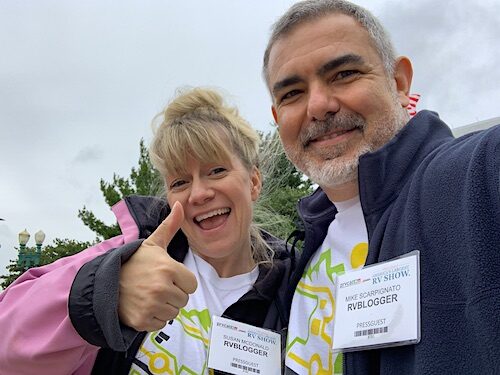
Mike Scarpignato – Bio
Mike Scarpignato founded RVBlogger.com with his wife, Susan, in 2018 to help new and experienced RVers make better decisions about buying, owning, and traveling in an RV.
Mike has decades of camping experience and has traveled extensively in both a Gulf Stream Conquest Class C and a Thor Challenger Class A motorhome. He and Susan spend much of the year on the road, attend RV shows, visit dealerships, and tour RVs across the country.
Through RVBlogger.com and the RVBlogger YouTube channel, Mike shares practical, first-hand advice about RV buying, floor plans, ownership, maintenance, gear, campgrounds, and the RV lifestyle.
In many states the sales taxes can be an issue and an expense. In AZ, a used “anything” purchase from a dealer is subject to sales taxes while a private sale is not. Even “consignment” dealers have to charge sales taxes. And in AZ, it is getting very close to 10%, depending on the county and city rip offs!
Wow, the sales tax is creeping up! In many states, you have to pay sales tax on new and used vehicles…The States always want their pound of flesh!
Thanks for reading the article and for your comment.
Mike