
Thanks for your support! If you make a purchase using our links in this article, we may make a commission. And, as an Amazon Associate, I earn from qualifying purchases. See the full disclosure here.
Should you keep your RV gray tank open or closed? My honest answer is: it depends on how long you are staying and how you use your RV.
If we are camping for a weekend, I keep both the black tank and gray tank closed.
If we are staying in one place for a week or longer with full hookups, I usually leave the gray tank open and keep the black tank closed. Then I close the gray tank a day or two before dump day so I have enough gray water to rinse the sewer hose after dumping the black tank.
That is how we handle it, and it has worked well for us. But there are a few details that matter, especially if you are new to RVing.
My Short Answer
- Weekend or short stay: Keep both tanks closed.
- Long stay with full hookups: Keep the black tank closed. The gray tank can stay open.
- A day or two before dumping: Close the gray tank so it fills with enough water to rinse the sewer hose.
The one rule I would not bend is this: do not leave the black tank open.
Why I Keep Both Tanks Closed on Short Trips
If we are only camping for a weekend, keeping both tanks closed is simple and it works.
Most RV tanks can handle the wastewater from a normal weekend, although tank size and how much water you use obviously matter.
When dump day comes, both tanks have enough water in them to drain with some force. That is especially important for the black tank because you need plenty of liquid to help move the waste out.
Then I dump the gray tank second. That soapy sink and shower water helps rinse the black tank residue out of the sewer hose.
For a short trip, there is really no reason for me to leave the gray valve open.
Why I Leave the Gray Tank Open on Longer Stays
Gray tanks can fill quickly. Showers, dishes, handwashing, and normal sink use add up faster than a lot of new RVers expect.
If we are staying in one place for a week or longer, I do not want to keep checking the tank level and walking outside to dump it every day or two. Leaving the gray tank open lets the water drain as we use it.
But the black tank stays closed. Always.
If the black valve stays open, the liquid can drain away while solids remain behind. That is how you end up with buildup and the dreaded black tank pyramid. You want the tank to hold plenty of liquid until it is time to dump.
Why I Close the Gray Tank Before Dump Day
If the gray tank stays open right up until the moment you dump the black tank, you may not have much gray water available to rinse the sewer hose.
That is why I close the gray valve a day or two before I plan to dump. The exact timing depends on your tank size and how much water you use.
Then I dump in this order:
- Dump the black tank.
- Flush or rinse the black tank if possible.
- Dump the gray tank last to rinse the sewer hose.
It is a simple habit, but it makes dump day cleaner.
The Big Mistake When Leaving the Gray Tank Open
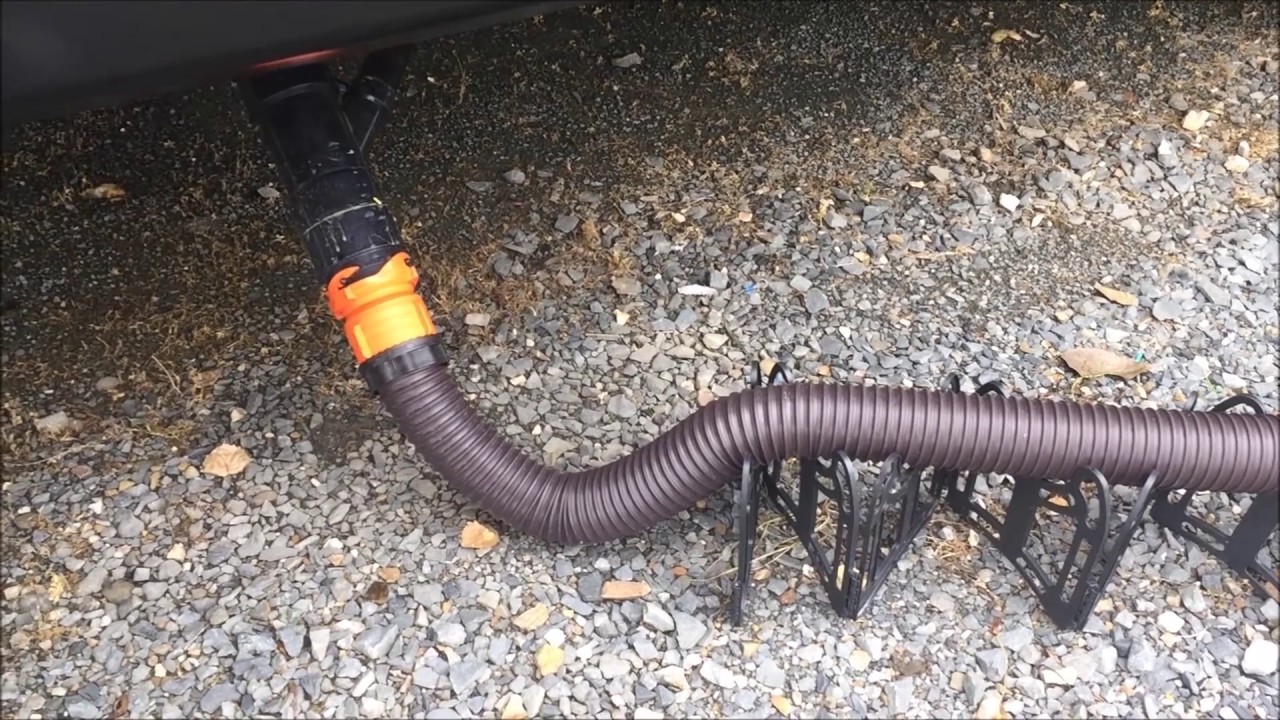
If you leave the gray tank open, do not run the sewer hose in a perfectly straight downhill line.
Create a low section in the hose that holds a small amount of water. That water acts like the P-trap under a sink and helps block campground sewer odors and sewer flies from traveling back toward your RV.
The key is making sure the low section actually contains water. A bend in the hose without water in it does nothing.
You still want most of the hose supported so wastewater flows toward the sewer connection. You are only creating one deliberate low spot to act as the trap.
How We Keep Our Black and Gray Tanks Clean
Whether you leave the gray tank open or closed, tank maintenance still matters. Gray tanks can collect soap residue, grease, food particles, hair, and other buildup. Black tanks obviously need plenty of water and regular treatment too.
There are two products we use ourselves and recommend because they solve different parts of the problem.
We Use Liquified Tank Treatment
We have been using Liquified Tank Treatment for more than two years, and it has worked great for us.
I do not say that just because it is an affiliate product. We actually use it in our RV.
When we had all four of our black and gray tanks professionally cleaned, every tank received an A grade. That told me our normal routine was doing what it was supposed to do.
A tank treatment is not a substitute for using enough water, dumping correctly, or rinsing the tanks. But it is part of the routine we use to control odors and help keep waste from building up.
You can learn more about the Liquified tank treatment products we use here.
No Built-In Tank Flush? We Use a RhinoBlaster
Our Class C RV does not have a built-in black tank flush or wash system, so we have used a RhinoBlaster with a gate valve for more than four years.
It attaches at the sewer outlet and connects to a separate garden hose. The water sprays back toward the tank to help loosen and rinse out waste.
The important part is buying the version with the gate valve.
Without that valve, the rinse water runs right back out. You cannot hold water in the tank long enough to fill it and get a stronger flush. The gate valve lets you close the outlet, add water, and then release everything at once.
That is why I would not save a few dollars by buying the simpler version without the valve. The gate valve is what makes the tool much more useful.
One safety point: we never use our white freshwater hose with the RhinoBlaster. We carry a separate hose in a different color and use it only for sewer and tank rinsing.
In the video above, we show how the RhinoBlaster works and explain why we recommend the model with the gate valve.
Should Beginners Keep the Gray Tank Closed?
If you are brand new to RVing, keeping both tanks closed is not a bad way to start.
It is easy to remember, it guarantees you have gray water available after dumping the black tank, and it removes the need to set up a sewer hose trap.
Once you are comfortable with your tank sizes, how fast they fill, and how your sewer setup works, you can decide whether leaving the gray tank open makes sense on longer stays.
What I Recommend for Most RVers
For weekend trips: Keep both tanks closed.
For longer stays with full hookups: Keep the black tank closed. Leave the gray tank open only if you create a water trap in the sewer hose.
Before dump day: Close the gray tank early enough to collect a good amount of rinse water.
For tank maintenance: Use plenty of water, use a tank treatment that works for you, and rinse the tanks. If your RV does not have a built-in flush, the RhinoBlaster with the gate valve is a practical alternative.
My Bottom Line
The gray tank is not an always-open or always-closed issue for me.
On short trips, I keep it closed. On longer stays, I am fine leaving it open as long as the black tank stays closed, the sewer hose has a water trap, and I remember to close the gray tank before dump day.
And no matter which way you handle the gray valve, do not ignore tank maintenance. Keeping the tanks treated, using enough water, and rinsing them properly is what prevents most of the ugly problems people run into.
Related Reading:
- How Do I Support My RV Sewer Hose?
- What Are RV Sewer Hose Weights?
- Best Disposable Gloves for Dumping RV Tanks
Mike Scarpignato – Bio
Mike Scarpignato founded RVBlogger.com with his wife, Susan, in 2018 to help new and experienced RVers make better decisions about buying, owning, and traveling in an RV.
Mike has decades of camping experience and has traveled extensively in both a Gulf Stream Conquest Class C and a Thor Challenger Class A motorhome. He and Susan spend much of the year on the road, attend RV shows, visit dealerships, and tour RVs across the country.
Through RVBlogger.com and the RVBlogger YouTube channel, Mike shares practical, first-hand advice about RV buying, floor plans, ownership, maintenance, gear, campgrounds, and the RV lifestyle.