
Thanks for your support! If you make a purchase using our links in this article, we may make a commission. And, as an Amazon Associate, I earn from qualifying purchases. See the full disclosure here.
Updated August 8, 2025
Propane powers many essential systems in your RV—fridge, heating, generator—but is it really safe—or even legal—to keep it on while driving? This updated guide breaks down current regulations, risks, and expert safety tips to help you travel smart.
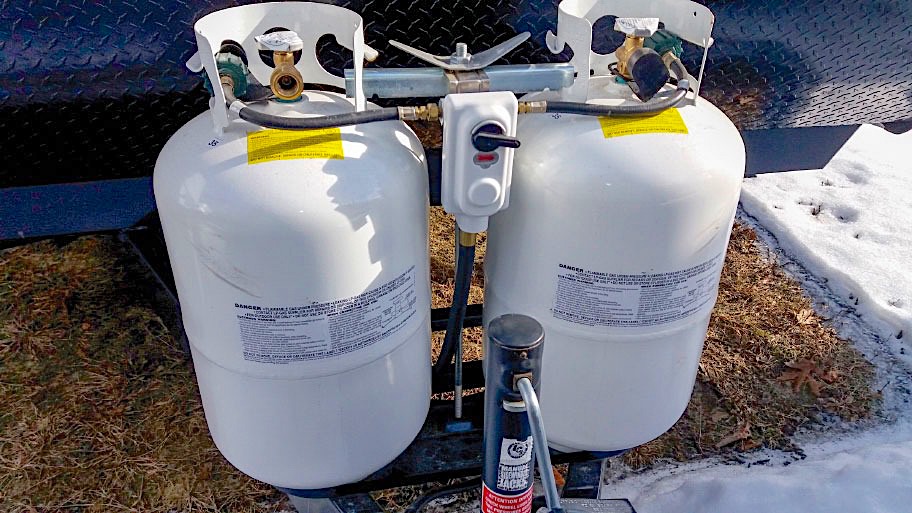
Legal Considerations: Where You Drive Matters
- United States: Most states do not have laws prohibiting driving with propane on. However, some areas—particularly tunnels, gas station zones, or certain highways—may explicitly require propane to be turned off.
- Canada (e.g., British Columbia): Some provinces do restrict the use of propane while in motion.
It’s vital to check current regulations for every region you’ll travel through before your trip.
Safety Risks When Driving with Propane On
Keeping propane active while driving introduces risks, including:
- Shifting or damaged gas lines: Bumps, potholes, or sudden stops can shift appliances or strain connections—potentially causing leaks.
- Fire or explosion threats: Even a small spark near a leak could lead to a serious incident.
- Tunnels and fueling areas: Increased hazards call for turning propane off in these zones.
- Accidents or tire blowouts: Any collision or undercarriage shift could rupture supply lines, compounding danger.
RV Refrigerator: Propane Use While Driving
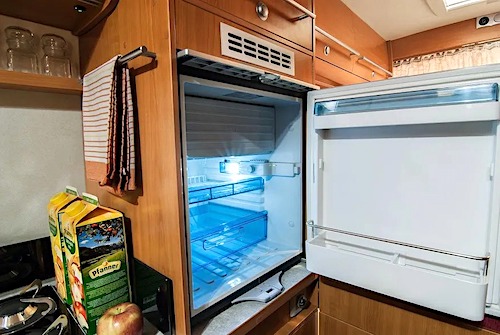
Yes, your fridge can run on propane during travel—but be cautious:
- Off-level risk: Stopping on uneven ground may cause damage to fridge components.
- High-pressure dangers: Propane lines are vulnerable during movement.
- Accumulator battery matters: A strong battery supports efficient propane combustion and extends run time—but doesn’t remove leak risk.
How Long Will Your RV Fridge Run on Propane?
Modern RV fridges are highly efficient, often allowing your unit to stay cold for days or weeks, depending on insulation and usage. Stronger batteries can help fuel savings by ensuring efficient ignition cycles.
Expert Advice & Safety Tips
- Default to “Propane OFF” while driving, unless you’re certain local law says otherwise. Safety first.
- Add these steps to your pre-departure checklist:
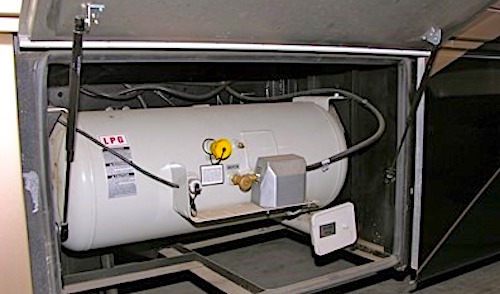
- Turn off propane at the tank.
- Disable any active systems powered by propane.
- Check all lines and appliances for secure connections.
- Consider a gas-leak auto-shutoff device—but use only when parked, not while driving.
- Regular maintenance matters: Inspect hoses and valves for wear or damage; replace any suspect parts promptly.
- Battery health is key: A strong battery supports safe and efficient propane use—but never substitutes for proper safety protocols.
Final Thoughts
While running your RV on propane while driving may be technically possible and legal in most places, the unnecessary safety risks make it a risky choice. The best route? Turn propane off whenever you hit the road—except perhaps in rare, well-researched cases.
When in doubt: Safety first, always.
– How Long Will an RV Fridge Run on Propane?
– RV Propane Not Flowing? How To Troubleshoot and Solve
– How Long Does an RV Propane Tank Last
– How Much Propane Does An RV Water Heater Use?
Does the RV Fridge Need Battery to Run on Propane?
Most RV fridges require a battery to run on propane. However, the type of battery you use will have a significant effect. The strength of the battery will affect the efficiency of the propane. In other words, if you have a stronger battery, you will have better fuel efficiency with your propane. Conversely, if you have a weaker battery you will notice that your propane gets used up much quicker. As a result, although a better battery will cost more, it will be more cost effective in the long term to purchase a stronger battery. With a stronger battery, you won’t need to spend as much money refueling your propane tank in the long term.
All the Information You Need About Propane in RVs and Travel Trailers
After reading, we hope you have all the information you need about propane in RVs and travel trailers. We know there’s a lot to learn about laws and safety regulations when it comes to propane, but it’s important to take your time to learn everything you can on the topic. The last thing you want is to break a law or endanger yourself because you didn’t know about a law or regulation. Failing to abide by these laws and regulations could lead to severe consequences legally and to your well being.
Whether you’re a new or experienced RV owner, keeping up to date with the laws about propane is important. They can be different based on where you live, and they can be changed. As a result, you need to keep up to date with the laws where you live and stay informed. Failing to do your research about something that affects your safety and others would be irresponsible. With that said, we hope that the information we provided was helpful to you as you get ready for your next road trip!
Are you a new or experienced with RVs and travel trailers? Have you used propane for something that isn’t related to RVs? Let us know in the comments!
Mike Scarpignato – Bio
Mike Scarpignato founded RVBlogger.com with his wife, Susan, in 2018 to help new and experienced RVers make better decisions about buying, owning, and traveling in an RV.
Mike has decades of camping experience and has traveled extensively in both a Gulf Stream Conquest Class C and a Thor Challenger Class A motorhome. He and Susan spend much of the year on the road, attend RV shows, visit dealerships, and tour RVs across the country.
Through RVBlogger.com and the RVBlogger YouTube channel, Mike shares practical, first-hand advice about RV buying, floor plans, ownership, maintenance, gear, campgrounds, and the RV lifestyle.


As a general rule, you should TURN YOUR PROPANE OFF while traveling.
Propane Fires are the NO. 2 reason for RV Accidents. The No. 1 RV Accident reason is AGE and Inexperience of the RVer.
I researched this several years ago and DOT does keep statistics on RV Fires and Accidents! You can search the DOT website!
Safety should never be taken lightly!
I use a product called “GAS STOP”! Designed to shut off your propane should a leak occur! But, this product should only be used while you are parked or in a Campground! Not while traveling!
You can research RV Fires as well and see that most RV fires were the result of RV refridgerators that had propane problems!
Your best and safest bet is to TURN OFF YOUR PROPANE WHILE TRAVELING!!!!!
We attended an RV show where a fireman spoke how dangerous and foolish it is to drive with propane on. We blew a rv tire and the rubber almost hit the propane hose .
It is very possible to damage a propane fridge if it is operated significantly off-level for a relatively short time. If traveling with propane on and stopping at a roadside attraction it is often the case that you park very much off level. So while you take a short hike you may damage the fridge. Better to make turning off the propane one of your getting-on-the-road checklist items. Your fridge and freezer will easily keep your food safe during the hours between your campsites.
Good info. We just bought our first travel trailer. Thursday is our first day out with it.