Thanks for your support! If you make a purchase using our links in this article, we may make a commission. And, as an Amazon Associate, I earn from qualifying purchases. See the full disclosure here.
Published January 9, 2024 | Last updated August 4, 2026
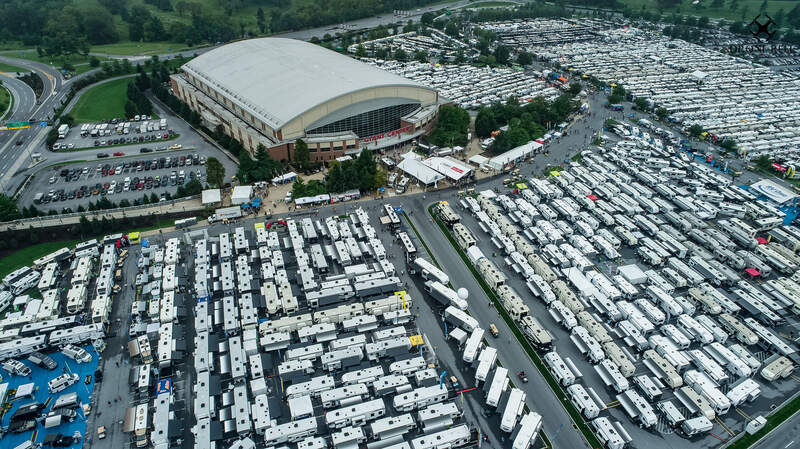
Susan and I have attended several RV shows every year since 2019. We have walked through thousands of RVs, filmed hundreds of video tours, talked with manufacturers and dealers, and learned how easy it is to become completely overwhelmed by the end of the day.
An RV show can be one of the best places to compare floor plans and learn what you really want. It can also be one of the worst places to make a rushed buying decision.
These are the practical RV show tips we use ourselves to cover more ground, remember what we saw, and avoid getting distracted by a giant “show price” sign.
1. Decide What You Want to Learn Before You Arrive
Do not show up with a plan to “look at some RVs.” That is how you end up wandering for six hours and remembering almost nothing.
Before the show, decide what you are trying to accomplish.
- Compare two or three RV classes
- Find a floor plan for a couple, family, or full-time travel
- See whether a specific bathroom or bed arrangement works
- Compare brands that build similar floor plans
- Research prices without buying
- Talk with manufacturers about construction or warranty questions
I would make a shortlist of models and manufacturers before leaving home. You can still walk through something unexpected, but your shortlist keeps the day from turning into a blur.
2. Check the Show Rules Before You Go
Every RV show is different.
Before you leave, check the event website for:
- Ticket prices and online discounts
- Parking cost and payment method
- Bag and security rules
- Food and drink policies
- Re-entry rules
- Pet policies
- Wheelchair or scooter rentals
- Seminar schedules
- Whether test drives are offered
Some shows allow outside water and snacks. Others do not. Some use metal detectors and inspect bags. Do not assume the rules from one show will apply to another.
3. Attend on a Weekday or Arrive When the Doors Open

Weekdays are usually the best time to attend a multi-day RV show.
You will have more room inside the RVs and more time to speak with salespeople and manufacturer representatives.
If you can only attend on a weekend, arrive when the doors open. Late Sunday afternoon can also be quieter, but I would not count on that if the show is popular.
Trying to evaluate a shower, bed, or dinette while three other families are standing behind you is not much fun.
4. Dress for a Long Day and Bring the Right Gear
You will probably walk much farther than you expect.
Wear comfortable shoes and check whether the show is indoors, outdoors, or spread across both.
Susan can be warm outside and then cold inside an air-conditioned building ten minutes later, so layers help.
I would bring:
- A fully charged phone
- A portable battery bank
- A small tape measure
- A notes app or small notebook
- Water and snacks when allowed
- A lightweight bag for brochures and personal items
I would not rely on plugging your phone into display RVs. Bring your own battery bank and keep moving.
5. Photograph the Model Number Before You Enter
This is one of the best habits Susan and I developed after attending so many RV shows.
Before walking into an RV, take a picture of:
- The exterior
- The manufacturer and model number
- The price sheet
- The weight and capacity sticker when available
Then take pictures or a short video inside.
By the end of the day, every rear-living travel trailer and mid-bunk fifth wheel starts to look the same. The exterior and model-number photo tells you exactly where the interior photos belong.
6. Test the Floor Plan Like You Already Own It
Do not just stand in the doorway and say, “This looks nice.”
Use the RV the way you would use it while camping.
- Sit on the sofa and dinette
- Lie on the bed if the dealer allows it
- Stand in the shower and close the door
- Sit on the toilet and check knee room
- Open the refrigerator, drawers, and cabinets
- Imagine where chairs, tools, hoses, food, and clothing will go
- Check whether you can reach the bathroom and refrigerator with the slides closed
- Make sure you can walk around the bed
This is exactly how we review RVs for our YouTube channel. A floor plan can look fantastic on paper and be irritating in real life.
A two-foot-square corner shower may technically be a shower, but that does not mean you will enjoy using it. A bed that requires you to crawl over your spouse every night can get old fast.
7. Confirm the RV Fits Your Tow Vehicle and Campsites
A beautiful travel trailer is useless if your truck cannot safely tow it.
Before shopping, know your tow vehicle’s:
- Payload capacity
- Maximum towing capacity
- Gross combined weight rating
- Hitch rating
Payload is often the limiting number, especially after you add passengers, gear, the hitch, and loaded tongue weight.
Also think about where you camp. A 43-foot fifth wheel may feel amazing at the show but limit your campground choices. Bigger is not automatically better.
8. Ask Manufacturer Reps Different Questions Than Salespeople
Manufacturer representatives and salespeople can both be helpful, but I use them differently.
I ask manufacturer reps about:
- Wall, roof, and floor construction
- Insulation
- Tank sizes
- Available factory options
- Warranty coverage
- Changes from the prior model year
I ask salespeople about:
- The exact selling price
- Dealer fees
- Financing
- Trade-ins
- Service availability
- Delivery and inspection procedures
Salespeople can know a lot, but verify important weights and specifications on the manufacturer’s label or official documentation.
9. Do Not Assume the RV Show Price Is the Best Price
RV show signs often advertise huge discounts from MSRP.
That does not automatically make the RV a good deal.
MSRP can be inflated, and a dealer can advertise a large discount while adding freight, preparation, documentation, and mandatory packages later.
If you are serious about buying, request a written out-the-door breakdown showing:
- Selling price
- Freight or destination charge
- Dealer preparation fee
- Documentation fee
- Required add-ons
- Trade-in value and payoff
- Taxes and registration
- Total amount due
Then compare the exact model and options with other dealers.
Do not negotiate from a monthly payment. A dealer can lower the payment by stretching the loan while leaving you with a terrible total price.
10. Never Leave a Deposit Without Reading the Terms
RV shows create urgency. The salesperson may tell you the price is only good today or that another buyer is interested in the same unit.
Sometimes that may be true. It still does not mean you should hand over a deposit without understanding the agreement.
Before paying anything, ask:
- Is the deposit refundable?
- What conditions allow me to cancel?
- Is the purchase contingent on financing?
- Is the sale contingent on an independent inspection?
- Which exact VIN or unit am I buying?
- Are all promised repairs and accessories listed in writing?
Verbal promises are easy to forget after the show. Get everything in writing.
11. Rent a Similar RV Before You Buy
Walking through an RV for ten minutes cannot tell you what it is like to camp in it.
Susan and I rented a Class C before buying our first RV. That trip helped us discover what we liked and what we absolutely did not want.
We also rented a towable RV through Outdoorsy and had it delivered and set up at our campsite. That is a great option if you want to try a travel trailer or fifth wheel but do not yet own the right tow vehicle.
You can search Outdoorsy for RV rentals near you, including rentals that may offer delivery and campsite setup.
A weekend rental can reveal problems you will never notice at an RV show: an uncomfortable bed, a cramped shower, nowhere to store food, or a dinette you have to rebuild every night.
12. Inspect the RV Before Final Acceptance
Never assume a brand-new RV is defect-free.
Display units may have hundreds of people walking through them. Even an untouched unit can leave the factory with plumbing leaks, damaged appliances, slide problems, missing sealant, loose wiring, or other defects.
I recommend an independent RV inspection before final acceptance.
If a professional inspection is not in your budget, use a detailed checklist and test every system. Do not allow the dealer to rush the pre-delivery inspection.
For buyers who want more help understanding the purchase process, we have used and recommend RV Education 101. Their RV buying video training explains how to evaluate an RV purchase and avoid expensive mistakes. I would use it as preparation before the show—not as a substitute for comparing prices or inspecting the actual RV.
My Bottom Line
RV shows are one of the best ways to compare a lot of RVs in one place.
They are not the best place to make an emotional decision because a salesperson says the deal expires in twenty minutes.
Go in with a shortlist. Take pictures of every model number. Test the shower, bed, bathroom, storage, and slide-closed access. Confirm the RV fits your tow vehicle and camping style. Then go home, compare the written out-the-door price, and think clearly.
The goal is not to leave the RV show owning something. The goal is to leave knowing which RV will actually work for you.
Related Reading
- Best RV Shows Across the U.S. Every Year
- How Much Can You Negotiate on a Travel Trailer?
- Questions to Ask When Buying a New Camper
- Should You Buy an RV?
Mike Scarpignato – Bio
Mike Scarpignato founded RVBlogger.com with his wife, Susan, in 2018 to help new and experienced RVers make better decisions about buying, owning, and traveling in an RV.
Mike has decades of camping experience and has traveled extensively in both a Gulf Stream Conquest Class C and a Thor Challenger Class A motorhome. He and Susan spend much of the year on the road, attend RV shows, visit dealerships, and tour RVs across the country.
Through RVBlogger.com and the RVBlogger YouTube channel, Mike shares practical, first-hand advice about RV buying, floor plans, ownership, maintenance, gear, campgrounds, and the RV lifestyle.