
Thanks for your support! If you make a purchase using our links in this article, we may make a commission. And, as an Amazon Associate, I earn from qualifying purchases. See the full disclosure here.
Updated August 8, 2025
Your RV water filter is the key to safe, clean drinking water while traveling. But how often should you replace it, and what’s the best way to keep it in good shape—especially if you only use your RV on weekends? This guide explains RV water filter replacement, maintenance, and storage tips so your water stays fresh and healthy.
Quick Answer: Most RV water filters should be replaced every 3 to 6 months, depending on filter type, water quality, and usage frequency. Inline filters often need changing closer to 3 months, while under-sink systems can last up to 6 months.
💧 How Often to Replace Your RV Water Filter
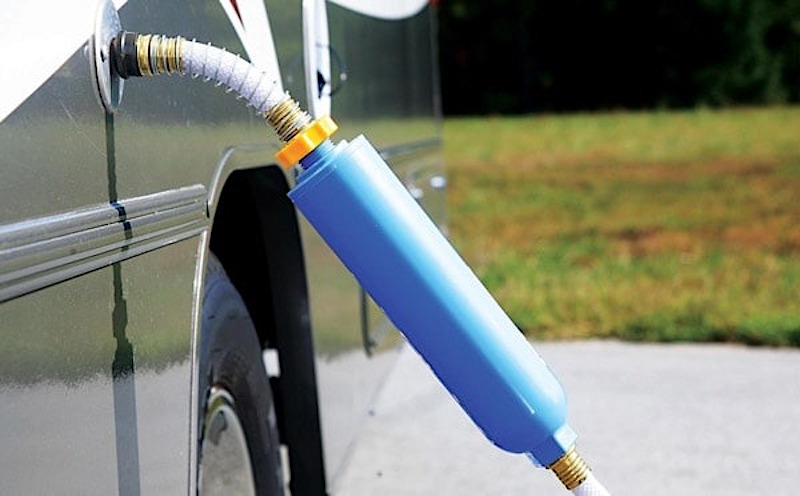
For most RV water filters, replacement is recommended every 3 to 6 months. Inline RV water filters, which connect directly to your freshwater hose, generally need changing closer to every 3 months. Under-sink or canister RV filtration systems can sometimes last 6 months or longer. Heavy usage, high sediment levels, or poor water quality can shorten that timeframe.
⚠️ Why You Shouldn’t Wait Too Long
An old or clogged RV water filter can slow water flow, reduce filtration efficiency, and even allow contaminants through. Replacing your RV water filter early is better than risking poor water quality—especially before long trips when finding a replacement may be difficult.
🧽 Can RV Water Filters Be Cleaned and Reused?
Some sediment filters can be rinsed, but most RV water filters—especially carbon filters—are not designed for reuse. Attempting to clean them can damage the filter media, making them less effective or even unsafe. For the best RV water filtration performance, replace rather than reuse.
🔍 Types of RV Water Filters
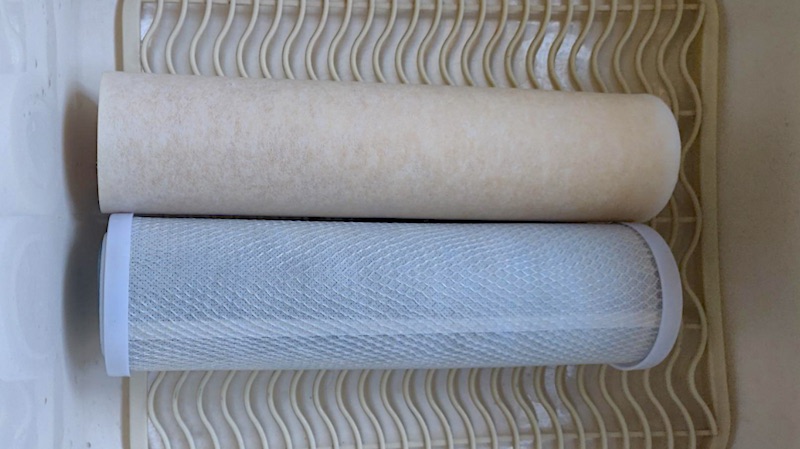
- Sediment Filters – Trap dirt, sand, and debris before water enters your RV plumbing.
- Carbon Filters – Improve taste, remove odors, and filter some chemicals from campground water.
- Ceramic Filters – Filter out bacteria and other small particles, often reusable after careful cleaning.
Knowing which RV water filter you have helps you choose the correct replacement schedule and model.
☀️ Consider Adding UV Purification
Even the best RV water filters can’t remove every microorganism. A UV water purification system for RVs adds an extra layer of protection by killing bacteria and viruses. Many modern RV UV systems are compact, energy-efficient, and can be installed right in your RV’s water line.
🗓 What to Do With Your RV Water Filter Between Trips
If you’re a weekend RVer or only take occasional trips, your RV water filter still needs proper care between outings:
- Remove and drain the filter if your RV will sit unused for more than a week or two. Leaving it wet can lead to bacterial growth.
- Store the RV water filter in a clean, dry place away from direct sunlight. UV rays can weaken filter materials over time.
- Cap both ends of the filter to keep out dust, insects, or debris.
- If you leave it installed, flush the RV water filter for a few minutes before your next trip to clear stagnant water.
- Replace sooner than the maximum recommended time if the filter has been sitting unused but wet for weeks—it can still harbor bacteria even without regular use.
🛠 Tips for Maintaining Your RV Water Filtration System
- Mark RV water filter replacement dates on your calendar or set a phone reminder.
- Carry a spare RV water filter so you’re never caught without one.
- Use a sediment pre-filter to extend the life of your main RV water filter.
- Store filters in a dry, cool place when not in use.
❓ RV Water Filter Q&A
Q: How often should I change my RV water filter?
A: Replace your RV water filter every 3 to 6 months, or sooner if water flow slows, taste changes, or you camp in areas with poor water quality.
Q: Can I use my RV water filter year-round?
A: Yes, but monitor its condition and replace it based on usage and water quality. In winter, always remove and store it properly to prevent freezing damage.
Q: Do I need a separate drinking water filter in my RV?
A: While your main RV water filter improves taste and removes some contaminants, a dedicated drinking water filter or UV system offers extra protection against bacteria and viruses.
Q: How do I know if my RV water filter is bad?
A: Signs include reduced water flow, unpleasant taste or odor, or visible discoloration inside the filter housing.
Q: Should I filter all the water coming into my RV or just drinking water?
A: Filtering all incoming water helps protect your RV’s plumbing and appliances from sediment buildup. A separate drinking water filter ensures top-quality water for consumption.
Q: Can I travel with the RV water filter connected?
A: Inline filters are typically connected only when parked, but under-sink filters can remain installed during travel. Always disconnect exterior filters before hitting the road.
What Is the Best RV Water Filter?
Here we will look at a few of the water filter options available to you. Some will be high end options, while others will be low end options that you can purchase if you do not have extra money to spend. Regardless, they should all be effective and get the job done.
1. Best of the Best
This filter from Clearsource is an award winning RV water filter. It was featured in the 2018 TrailerLife Magazine’s “Essential Equipment For RV Camping” Gear Guide. It also received several other accolades throughout the rest of 2018 and 2019.
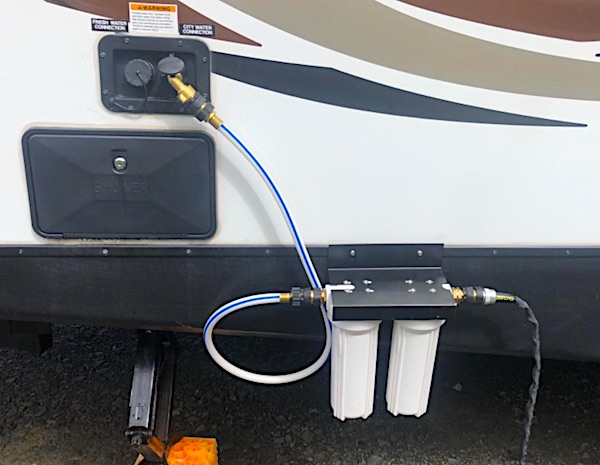
This RV water filter was engineered from the ground up for an RV owner. It has a powder-coated chassis, and stainless steel fitting. It also has oversized canisters to provide you with the maximum possible water flow.
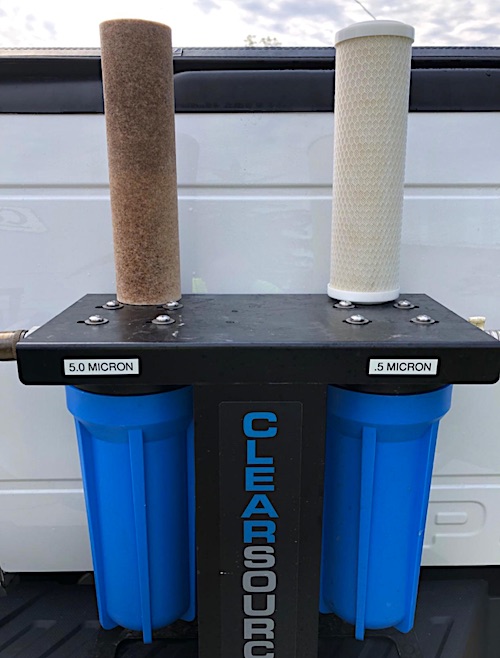
The filter is built with NSF certified filter elements. Its five micron first stage filter effectively removes sediments from water. Its 0.5 micron second stage removes any chlorine, volatile organic compounds, cysts, giardia, and any other contaminants that are still in your water. The filter also has coconut shell carbon block technology that ensures that you will have great tasting water.
2. Middle of the Pack
This water filter from the Beech Lane Store is another good option for you. It uses lead-free brass fixtures to prevent leaks from your system. This will make sure that no dirty water will get through your system. They filter uses a dual water filter with 5 micron and 0.5 micron filters. This should ensure that you have maximum purity.
This filter is built to last as it has a very sturdy construction. It also improves the taste of your water and reduces any possible odors that can result from contaminants getting in your water.
We recently switched over to the Beech LaneWater filter and it has made a huge difference in our water quality. Buy this filter or the Clearsource and don’t waste your money on the cheapie filter.
Finally, this water filter has a lifetime warranty. So, if the filter does not fit the way you would like or if it breaks, you can have it replaced.
3. Better than Nothing
The final RV water filter we will be looking at is from Camco. It is not the best option available, but it will get the job done in a pinch. It will greatly reduce the sediment and chlorine levels in your water. Additionally, it will also reduce any bad tastes or odors that come from your water. You should note that this is all just a reduction. This water filter will not completely eliminate contaminants.
A beneficial aspect of this water filter is that it will last for six months, twice as long as your typical water filter. In addition to the regular places you would put a water filter, you can also place it on a standard gardening hose to provide you healthier drinking water.
The filter has a 20-micron sediment filter, which means that it will remove particles greater than 20 microns. It should also protect against any bacteria growth while the water filter is in use.
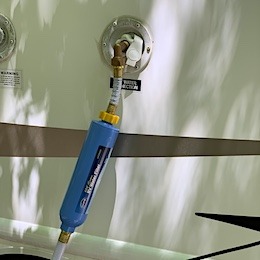
Additionally, the RV water filter contains a heavy-duty flexible hose protector that should help reduce the strain on connections without any kinking. The water filter is also compliant with all federal and state low lead laws.
✅ Final Thoughts
For most RV owners, replacing the RV water filter every 3 to 6 months is ideal. If your travels take you to areas with questionable water quality, change them more often.
Pairing a high-quality RV water filter with a UV purification system offers the best protection for your drinking water. And if you’re a weekender, proper storage between trips can extend filter life and keep your water tasting great.
Are you a new or experienced RV owner? What type of RV water filter do you think you will purchase? Have you had RV water filter issues before? Let us know in the comments!
Mike Scarpignato – Bio
Mike Scarpignato founded RVBlogger.com with his wife, Susan, in 2018 to help new and experienced RVers make better decisions about buying, owning, and traveling in an RV.
Mike has decades of camping experience and has traveled extensively in both a Gulf Stream Conquest Class C and a Thor Challenger Class A motorhome. He and Susan spend much of the year on the road, attend RV shows, visit dealerships, and tour RVs across the country.
Through RVBlogger.com and the RVBlogger YouTube channel, Mike shares practical, first-hand advice about RV buying, floor plans, ownership, maintenance, gear, campgrounds, and the RV lifestyle.


How do you store your water filter when not in use ????
You folks are very good.. I’m in the process of looking for an rv and am learning a lot so I know what to look for and what questions to ask. Very informative.
Thanks Jerry!
Glad you like the info we share!
Mike