Thanks for your support! If you make a purchase using our links in this article, we may make a commission. And, as an Amazon Associate, I earn from qualifying purchases. See the full disclosure here.
Buying your first RV is exciting, but it is also a big financial decision. You can walk through dozens of RVs at a dealer or an RV show and still not know what it will really feel like to live in one for a weekend.
That is why Susan and I believe renting an RV before you buy one can be one of the smartest things a first-time buyer can do.
We did it twice.
Before we bought our Class C, we rented a 19-foot Cruise America Class C and took it on a California road trip. Later, when we were deciding between a fifth wheel and a Class A motorhome, we rented a fifth wheel through Outdoorsy and had the owner deliver it and set it up at our campsite.
Both rentals taught us things we never would have learned from standing inside an RV on a dealer lot.
The goal is not to turn renting into another expensive step in the buying process. The goal is to spend a little money now so you do not lose a lot more money trading out of the wrong RV a year or two later.
Should You Rent an RV Before You Buy One?
For most first-time buyers, I think renting an RV before buying is extremely valuable.
It is not always necessary. If you have years of RV experience, already know exactly what type of RV you want, and understand how the floor plan will work in real life, you may not need to rent first.
But if you are deciding between a Class C, Class A, travel trailer, fifth wheel, or camper van, renting can answer questions that hours of online research cannot.
You learn what it feels like to drive or tow it. You learn how long setup takes. You learn whether the bathroom is usable, whether the bed is comfortable, whether the kitchen works, and whether the RV feels roomy or cramped after you have been inside for more than 15 minutes.
That is the information that helps you avoid buying the wrong RV.
We Rented a Class C Before Buying Ours
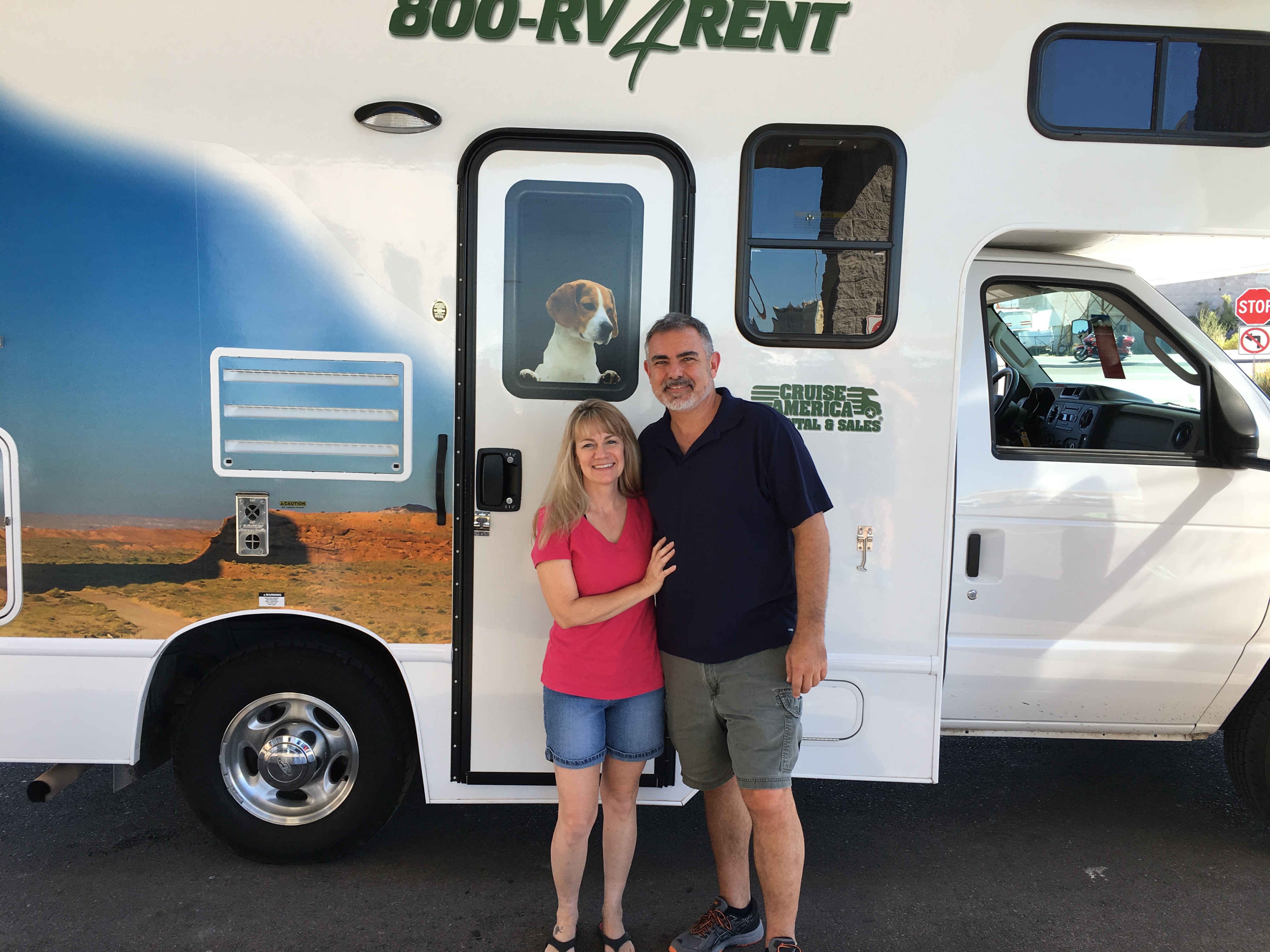
Before Susan and I bought our Class C, we rented one from Cruise America.
It was only 19 feet long, and I will be honest: I freaked out when I first saw it.
I thought it looked too small. I immediately started trying to figure out whether we could trade up to a bigger model.
Thankfully, we did not.
That little Class C worked out great, and the experience taught us something important. A shorter RV can give you access to roads and campgrounds that may be difficult or impossible in a larger rig.
On that trip, we drove to Potwisha Campground in Sequoia National Park and also traveled on Nacimiento-Fergusson Road in California. Those roads made me very glad we were not in a much larger motorhome.
That rental helped us understand why size matters in both directions. You need enough room to be comfortable, but bigger is not automatically better.
What We Learned From Renting the Class C
We Did Not Want a Wet Bath
The rental had a wet bath, where the shower and toilet share the same small space.
Some people are perfectly happy with a wet bath, especially in a very small RV. We were not.
Using one taught us that we wanted a separate shower and toilet area in the Class C we eventually bought.
That sounds like a small detail until you are actually using the bathroom every day. A floor plan can look fine in photos and still be annoying in real life.
We Needed at Least a Queen-Size Bed
We also learned that we needed at least a queen-size bed.
Sleeping arrangements are easy to overlook when you are shopping because buyers get distracted by TVs, fireplaces, outdoor kitchens, and pretty cabinets.
But if you do not sleep well, the RV is not going to feel like a good purchase for very long.
Renting gave us a chance to live with the bed instead of just sitting on it for a minute at a dealership.
A Shorter RV Was More Capable Than I Expected
I started the trip thinking the 19-foot Class C was too small.
By the end of the trip, I understood why compact Class C motorhomes are so useful. They are easier to drive, easier to park, and more likely to fit in smaller campsites and campgrounds.
That did not mean we wanted the smallest RV possible. It helped us find the balance between enough interior comfort and reasonable exterior size.
What Cruise America Included and What Cost Extra
We thoroughly enjoyed our Cruise America rental, and I am glad we did it.
But you need to understand that large rental companies may provide a fairly empty RV. That is just how their rental model works.
Our kitchen package and linen package cost extra. The RV did not come stocked with the kinds of household and camping items many people assume will be inside.
We ended up going to Walmart to buy a toaster, a coffee pot, camping chairs, and other things we needed for the trip.
Because we were traveling across the country, we could not take everything home with us. We ended up giving some of those items to the next renters.
I do not say that to criticize Cruise America. We had a great trip. You just need to read the rental details carefully and budget for extras.
Before booking any RV rental, check what is included:
- Cookware and utensils
- Dishes and silverware
- Coffee maker and toaster
- Sheets, blankets, and towels
- Camping chairs
- Grill or outdoor cooking gear
- Sewer hose, freshwater hose, and electrical adapters
- Generator use and mileage allowances
A rental that looks cheaper can cost more after you add packages, mileage, generator fees, insurance, delivery, and supplies.
We Rented a Fifth Wheel Before Choosing Our Class A
Years later, Susan and I realized we were starting to outgrow our Class C.
We were considering a travel trailer, a fifth wheel, or a Class A motorhome. We had reviewed plenty of them, but reviewing an RV and camping in it are not the same thing.
So we decided to take our own advice and try before we bought.
There was one obvious problem. My Toyota Tacoma could not tow the fifth wheel we wanted to test, and our Jeep certainly could not tow it either.
That is where Outdoorsy made the test possible.
We found a fifth wheel whose owner offered delivery and campsite setup. He brought the RV to the campground, backed it into the site, leveled it, connected everything, and walked us through how the fifth wheel worked.
We got to camp in it for the weekend without buying a heavy-duty truck first.
This same approach can help someone who is considering a travel trailer but does not own a tow vehicle yet. Search for rentals that offer delivery and setup, and you can test the RV itself before committing to both a trailer and a truck.
What We Learned From Renting the Fifth Wheel
The fifth wheel had plenty of space, and we enjoyed camping in it.
But the rental helped us realize that the RV itself was only part of the decision.
To own that fifth wheel, we would also need a heavy-duty truck. We would need to hitch and unhitch it, learn to tow it, back it into campsites, level it, stabilize it, and complete the rest of the setup process.
That setup issue became the biggest deciding factor for us.
With our Class C, I used to brag that I could get parked, leveled, completely set up, and have a drink in my hand in about 15 minutes.
Meanwhile, we would sometimes watch travel trailer owners spend an hour backing in, leveling, stabilizing, unhitching, and finishing their campsite setup.
I knew a fifth wheel would tow differently than a travel trailer, but it would still require a truck, hitching, backing, leveling, and more setup than we wanted.
That experience pushed us toward the Class A.
Now we drive our Class A and tow our Jeep behind us. When we arrive, setup is relatively simple, and we still have the Jeep for sightseeing and errands.
Renting the fifth wheel did not prove that fifth wheels are bad. They are a great fit for many RVers.
It proved that a fifth wheel was not the best fit for us.
Watch Our Fifth Wheel Rental Experience
We made a video about why we rented the fifth wheel, how delivery and setup worked, and what we learned from trying it before making a purchase.
Rent the Type of RV You Are Seriously Considering
Renting any RV can be fun, but this article is really about using a rental as a buying tool.
Try to rent something as close as possible to what you may buy.
If you are considering a Class C, rent a Class C in a similar length and floor plan.
If you are considering a bunkhouse travel trailer, rent a bunkhouse travel trailer.
If you are torn between a fifth wheel and a Class A, renting one or both can help you compare the real differences.
You probably will not find the exact make and model you want. That is okay. Focus on the major decisions:
- RV type
- Overall length
- Number of slide-outs
- Bed size and location
- Bathroom style
- Kitchen workspace
- Interior seating
- Storage
- Driving, towing, and setup requirements
Do Not Treat the Rental Like a Normal Vacation
Enjoy the trip, but pay attention to how the RV works in real life.
Use the shower. Cook a meal. Sit inside during the evening. Make the bed. Pack your clothes away. Use the bathroom with the door closed. Check whether you can move around when someone else is cooking.
If it is a drivable RV, notice how you feel behind the wheel. Can you hear each other while driving? Is there enough visibility? Does it feel exhausting after a few hours?
If it is a towable, pay attention to hitching, backing, leveling, and storage. Even if the owner delivers it, ask questions about what normal setup and towing involve.
The point is to uncover the little annoyances before they become your daily reality.
Questions to Answer During Your RV Rental
Before the rental ends, Susan and I recommend answering these questions honestly:
- Did the RV feel too small, too large, or about right?
- Was the bed comfortable and easy to use?
- Did the bathroom work for us?
- Could we prepare meals without getting frustrated?
- Was there enough storage for the way we travel?
- Did we enjoy driving or towing it?
- Was setup and breakdown manageable?
- Could we imagine using this RV for longer trips?
- What did we wish the RV had?
- What features looked impressive but did not matter once we camped?
Write your answers down while the experience is fresh.
Peer-to-Peer Rentals Can Feel More Like a Real RV
One thing we liked about our Outdoorsy rental was that it was an RV the owner actually used.
Because it was his personal fifth wheel, it already had camping chairs, kitchen appliances, utensils, cookware, and many of the things we needed.
That was very different from our Cruise America experience, where we paid extra for some packages and still had to buy additional items.
Every peer-to-peer rental is different, so do not assume everything is included. Read the listing, ask questions, and get the details in writing.
But a well-stocked owner rental can give you a more realistic picture of what the RV feels like when it is actually being used for camping.
You can search Outdoorsy for RV rentals near you, including many towable rentals that offer delivery and setup.
How Much Should You Spend to Test an RV?
A rental is not cheap, especially after insurance, mileage, delivery, campground fees, and supplies.
But compare that cost with buying the wrong RV.
Trading an RV after a year or two can mean losing thousands of dollars through depreciation, dealer trade-in values, taxes, fees, financing, and the cost of starting over.
Seen that way, a weekend rental can be inexpensive buyer protection.
I would rather spend money testing an RV than discover after signing that the bathroom is too small, the bed is uncomfortable, the rig is stressful to drive, or setup takes much longer than I want.
When Renting Before Buying May Not Be Necessary
I do not think every buyer must rent first.
You may not need to rent if you have extensive RV experience, have owned similar RVs before, or have spent enough time camping in the exact type of RV you plan to buy.
Renting may also be less useful if you can only find a model that is completely different from what you are considering.
But for a true first-time buyer, or anyone debating between major RV types, I think renting is one of the best ways to reduce uncertainty.
Our Final Verdict: Rent Before You Buy When You Can
Renting a Class C helped us buy a better Class C.
Renting a fifth wheel helped us decide not to buy a fifth wheel and choose a Class A instead.
Both rentals saved us from making decisions based only on floor plans, videos, and dealer walkthroughs.
They showed us what mattered to us in real life: a dry bathroom, at least a queen-size bed, enough space without going unnecessarily large, simple campsite setup, and an RV that matched the way we wanted to travel.
That is why we keep telling first-time buyers to try before they buy.
You may spend a little more before the purchase, but you may also save yourself from buying the wrong RV, trading it too soon, and paying for the same decision twice.
Related Reading
21 Essential Tips for First-Time RV Renters
Are There RV Rentals With Delivery and Setup to My Campsite?
RV Classes Explained: Drivable vs. Towable RVs
Class A vs. Class C Motorhome and How to Choose
Mike Scarpignato – Bio
Mike Scarpignato founded RVBlogger.com with his wife, Susan, in 2018 to help new and experienced RVers make better decisions about buying, owning, and traveling in an RV.
Mike has decades of camping experience and has traveled extensively in both a Gulf Stream Conquest Class C and a Thor Challenger Class A motorhome. He and Susan spend much of the year on the road, attend RV shows, visit dealerships, and tour RVs across the country.
Through RVBlogger.com and the RVBlogger YouTube channel, Mike shares practical, first-hand advice about RV buying, floor plans, ownership, maintenance, gear, campgrounds, and the RV lifestyle.