
Thanks for your support! If you make a purchase using our links in this article, we may make a commission. And, as an Amazon Associate, I earn from qualifying purchases. See the full disclosure here.
Published September 14, 2022 | Last updated July 29, 2026
A single-axle camper is usually the better choice if you want a lighter, less expensive trailer that is easier to maneuver. A dual-axle camper is usually better if you need more cargo capacity, a larger floor plan, and additional towing stability.
But I would not buy a dual-axle trailer just because someone told me two axles are automatically safer or better.
The extra axle, wheels, tires, brakes, and suspension parts add a significant amount of weight. That can turn an otherwise appealing camper into too much trailer for your current tow vehicle.
Susan has towed both a single-axle popup camper and a single-axle travel trailer. I have also towed a boat on a single-axle trailer. Neither of us felt that one axle automatically made the trailer unsafe. What mattered was whether the trailer was properly loaded, correctly hitched, maintained, and matched to the tow vehicle.
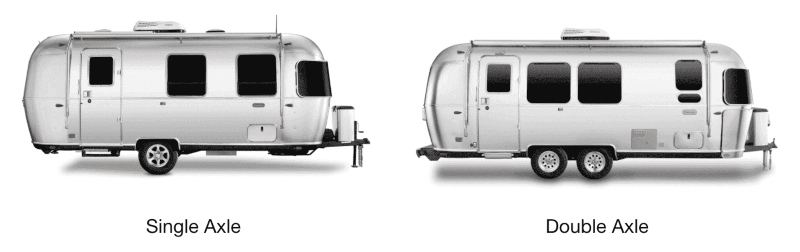
Single Axle vs Dual Axle: The Quick Answer
Here is the simplest way I would break it down for a first-time buyer.
- Buy a single-axle camper if low weight, lower cost, simple maintenance, easy maneuvering, and compatibility with a smaller tow vehicle matter most.
- Buy a dual-axle camper if you need a larger trailer, more cargo capacity, a wider selection of floor plans, and better highway stability.
- Do not buy either one until you confirm the loaded trailer weight, tongue weight, tow vehicle payload, receiver rating, tire ratings, and cargo capacity.
Axle count is only one part of the decision. The right single-axle trailer is much safer than a dual-axle trailer that overloads your truck or SUV.
What Is a Single-Axle Camper?
A single-axle camper has one axle and two primary road tires.
Single-axle travel trailers are usually shorter and lighter, although there are exceptions. They are common among teardrop trailers, fiberglass campers, popup campers, small bunkhouse trailers, couples trailers, and lightweight off-road campers.
The design appeals to beginners because there are fewer tires, bearings, brakes, and suspension components to maintain.
The real advantage, though, is weight. A lighter trailer may fit within the payload and towing limits of a midsize pickup, SUV, or crossover that could not safely handle a larger tandem-axle model.
What Is a Dual-Axle Camper?
A dual-axle or tandem-axle camper has two axles and four primary road tires.
Manufacturers commonly use two axles when a trailer becomes longer, heavier, or needs more cargo capacity than one axle can reasonably support.
Dual-axle campers usually provide more floor-plan choices, larger holding tanks, more storage, and additional sleeping space. But those benefits mostly come from the trailer being larger—not because a second axle magically creates a better camper.
The downside is that you are also buying more weight and more parts. That matters when choosing a tow vehicle and estimating long-term maintenance costs.
1. Tow Vehicle Match: Single Axle Usually Wins
This is the first thing I would look at—not trailer sway, resale value, or how many tires are touching the road.
Single-axle trailers are usually lighter, which makes them easier to match with smaller tow vehicles.
A dual-axle trailer can become significantly heavier once you add the second axle assembly, two additional wheels and tires, extra brakes, a larger frame, more storage, and a bigger floor plan.
Do not look only at the advertised dry weight. You also need to check:
- Trailer GVWR
- Realistic loaded trailer weight
- Loaded tongue weight
- Tow vehicle payload
- Receiver and hitch ratings
- Gross combined weight rating
Payload is where many first-time buyers get burned. The tongue weight, passengers, hitch, pets, tools, and cargo inside the tow vehicle all count against payload.
A trailer can be under the advertised maximum tow rating and still overload the tow vehicle’s payload or rear axle.
2. Highway Stability: Dual Axle Usually Wins
A properly set up dual-axle trailer will usually feel more planted on the highway than a comparable single-axle trailer.
Four tires create a longer contact area and the two axles help spread the load. That can reduce some of the bouncing and pitching you may feel with a short, lightweight single-axle camper.
But I would not say dual axles prevent sway.
Trailer sway is strongly affected by speed, tongue weight, loading, tire condition, suspension, crosswinds, passing trucks, and whether the trailer is properly matched to the tow vehicle.
An anti-sway system can help, but it cannot fix an overloaded tow vehicle, a badly loaded trailer, insufficient tongue weight, or excessive speed.
For many conventional travel trailers, a combined weight-distribution and sway-control hitch can improve the setup. One popular option is the CURT 17063 Round Bar Weight Distribution Hitch with Sway Control.
Do not buy a hitch only because it is an Amazon bestseller. The spring-bar rating, hitch rating, trailer tongue weight, tow vehicle requirements, and trailer frame must all be compatible.
3. Maneuverability: Single Axle Wins
Single-axle trailers are usually easier to maneuver into tight campsites, narrow driveways, storage spaces, and gas stations.
They tend to be shorter and can pivot more easily when backing.
A tandem-axle trailer has more tire scrub during tight turns because the two axles cannot follow the exact same path. That is normal, but it can make manual positioning and very sharp turns more difficult.
For a beginner who wants a small camper for state parks, older campgrounds, and tight wooded sites, a single axle can be a very practical choice.
4. Cargo Capacity: Dual Axle Usually Wins
Dual-axle trailers often have higher cargo-carrying capacity because the load is supported by two axles.
That can matter if you carry bikes, a generator, camping chairs, tools, a grill, food, water, and all the other gear that somehow accumulates after you buy an RV.
Still, never assume a dual-axle trailer has plenty of payload. Some large trailers are already heavy before you load them and have surprisingly low cargo capacity.
Check the yellow cargo label on the actual trailer. Do not rely only on a brochure or a similar floor plan you found online.
Once the trailer is loaded for camping, take it across a CAT Scale. Real weights beat guesses every time.
5. Purchase and Maintenance Cost: Single Axle Wins
A single-axle camper is usually less expensive to buy because it is generally smaller and uses fewer components.
It also has:
- Two tires instead of four
- Two wheel bearings instead of four
- Fewer brakes to inspect and service
- Fewer suspension parts
That does not mean single-axle tires or bearings automatically wear out faster. Every component should be rated for the trailer’s weight and maintained properly.
A dual-axle trailer simply has more parts that eventually need tires, bearings, brake components, alignment work, and suspension service.
6. Floor Plans and Comfort: Dual Axle Usually Wins
If you want a separate bedroom, large bathroom, outdoor kitchen, big bunk room, rear living room, washer and dryer prep, or large holding tanks, you will probably end up looking at dual-axle trailers.
The reason is simple: those features add length and weight.
Single-axle trailers can still have excellent floor plans, especially for couples or solo campers. But something usually has to give. You may have less storage, a smaller shower, a convertible bed, or limited cargo capacity.
This is why I would choose the floor plan and loaded weight first, then evaluate the axle configuration—not the other way around.
7. What Happens During a Tire Blowout?
A dual-axle trailer has an advantage during a tire failure because three tires may still be supporting the trailer instead of none on that side.
That may help the trailer remain more stable while you slow down and pull over.
But you are stopping either way.
I would not keep towing a tandem-axle trailer simply because three tires are still rolling. The remaining tire on that side may be overloaded, and the blown tire can damage wiring, plumbing, flooring, fenders, or the trailer body.
A tire-pressure monitoring system can warn you about a slow pressure loss or rising tire temperature before the problem becomes catastrophic. A practical option for a four-tire trailer is the TireMinder i10 RV TPMS with four transmitters.
A TPMS cannot prevent every blowout, but it gives you information you cannot see from the driver’s seat.
8. Braking: Do Single-Axle Trailers Have Brakes?
Many single-axle travel trailers have electric brakes. Do not assume that one axle means no brakes.
Trailer brake requirements vary by state and may depend on trailer weight, stopping-distance requirements, or trailer type. Check the laws for your home state and every state where you plan to tow.
More important, make sure the brakes actually work.
- Confirm the tow vehicle has a compatible brake controller.
- Test the manual override before the trip.
- Adjust the controller so the trailer helps stop without locking the wheels.
- Inspect the breakaway switch and battery.
- Service the brakes according to the axle and brake manufacturer’s instructions.
For tow vehicles without a factory-integrated controller, the Tekonsha Prodigy P3 is a well-established proportional brake controller I would consider. It has physical controls, a clear display, a manual override, and support for trailers with one to four axles.
The CURT Echo Mobile is another option for buyers who want a portable controller without a permanent installation. It uses a smartphone for setup and monitoring, which some owners will love and others will not.
9. Sway Control Helps Both Designs
Both single- and dual-axle travel trailers can sway.
A dual axle may feel more stable, but it is not immune to poor loading or excessive speed.
If sway begins, stay calm, keep the tow vehicle pointed straight, ease off the accelerator, avoid sudden steering, and use the trailer-brake controller’s manual override when appropriate to help straighten the trailer. Do not stomp on the tow vehicle brakes unless necessary to avoid a collision.
The real goal is to prevent sway before it starts by maintaining proper tongue weight, loading heavy cargo low and near the trailer’s axle area, keeping speed reasonable, maintaining tire pressure, and using the right hitch setup.
Who Should Buy a Single-Axle Camper?
I would lean toward a single axle when the buyer:
- Owns an SUV, crossover, midsize truck, or vehicle with limited payload
- Wants a small camper for one or two people
- Camps in tight state parks or older campgrounds
- Prioritizes lower purchase and maintenance costs
- Does not carry a large amount of gear
- Wants something easier to maneuver and store
Who Should Buy a Dual-Axle Camper?
I would lean toward a dual axle when the buyer:
- Has a tow vehicle with enough payload and towing capacity
- Wants a larger floor plan or private bedroom
- Needs more cargo capacity
- Travels frequently on highways
- Carries bikes, generators, outdoor gear, or family supplies
- Accepts higher tire and maintenance costs
Inspect the Axles Before Buying a Used Camper
Whether the trailer has one axle or two, inspect the running gear carefully before buying.
- Look for uneven tire wear.
- Check tire age and load ratings.
- Inspect leaf springs, shackles, equalizers, hangers, and welds.
- Check for bent axles or wheels that do not track correctly.
- Test the brakes and breakaway system.
- Look for grease contamination inside the brake assemblies.
- Verify the axle ratings against the trailer GVWR.
A professional RV inspection is the safer choice. If an inspection is not in the budget, use a detailed inspection checklist and do not rush the purchase.
My Bottom Line
Single- and dual-axle campers are both valid choices when they are properly designed, loaded, maintained, and matched to the tow vehicle.
I would choose a single axle for lower weight, lower cost, and easier maneuvering.
I would choose a dual axle for a larger floor plan, higher cargo capacity, and more planted highway manners.
But I would never choose the heavier trailer if it overmatched my tow vehicle. A second axle does not make an overloaded combination safe.
Start with your tow vehicle’s real limits, choose a floor plan you can live with, verify the loaded weights, and then decide which axle configuration makes sense.
Related Reading:
- How to Stop Travel Trailer Sway
- RV Weight Explained for Travel Trailers and Motorhomes
- How to Avoid RV Tire Blowouts
- Best Campers to Tow With an SUV
- Is an RV Inspection Worth the Cost?
Mike Scarpignato – Bio
Mike Scarpignato founded RVBlogger.com with his wife, Susan, in 2018 to help new and experienced RVers make better decisions about buying, owning, and traveling in an RV.
Mike has decades of camping experience and has traveled extensively in both a Gulf Stream Conquest Class C and a Thor Challenger Class A motorhome. He and Susan spend much of the year on the road, attend RV shows, visit dealerships, and tour RVs across the country.
Through RVBlogger.com and the RVBlogger YouTube channel, Mike shares practical, first-hand advice about RV buying, floor plans, ownership, maintenance, gear, campgrounds, and the RV lifestyle.

Northwood makes an 18 ft Nash that has dual axles. Nash 18FM. It pulls really nice!
Thanks for the info Frank!!! We will check one out!
Mike