Thanks for your support! If you make a purchase using our links in this article, we may make a commission. And, as an Amazon Associate, I earn from qualifying purchases. See the full disclosure here.
Published September 14, 2022 | Last updated July 12, 2026
Yes, an RV inspection is usually worth the cost, especially if you are buying a used RV, purchasing from a private seller, buying your first RV, or spending serious money on a motorhome, fifth wheel, or travel trailer. A good inspection can uncover water damage, roof problems, electrical issues, plumbing leaks, appliance failures, tire problems, frame concerns, and other expensive repairs before you own them.
An RV can look clean and well cared for during a walkthrough but still have hidden problems behind the walls, under the floor, on the roof, or inside major systems. That is why a professional RV inspection can be one of the smartest expenses in the buying process.
We have owned and used several RVs ourselves, including a Class C motorhome and a Class A motorhome, and we have toured and reviewed hundreds of RVs over the years. One thing we have learned is simple: small RV problems can become expensive problems fast.
In this article, we will explain what an RV inspection includes, how much an RV inspection costs, when it is worth paying for one, when a DIY inspection may be enough, and how an inspection can help you avoid buying the wrong RV.
Is an RV Inspection Worth It?
For most RV buyers, an RV inspection is worth it. This is especially true for first-time buyers because RVs are more complicated than cars and trucks. They combine many of the systems of a house with many of the systems of a vehicle.
A travel trailer, fifth wheel, Class B, Class C, or Class A motorhome may include plumbing, electrical, propane, HVAC, appliances, slide-outs, roof seals, holding tanks, batteries, inverters, suspension parts, tires, and sometimes a full drivetrain. Any one of those systems can become expensive if something is missed before purchase.
An RV inspection is worth the cost when it helps you do one of three things:
- Avoid buying an RV with serious hidden problems
- Negotiate a lower purchase price based on documented repairs
- Buy the RV with a realistic repair and maintenance budget
Even if the inspection does not uncover a major issue, it can still give you peace of mind. That matters when you are spending thousands, or even hundreds of thousands, of dollars on an RV.
How Much Does an RV Inspection Cost?
An RV inspection can cost anywhere from about $500 to more than $1,500, depending on the type of inspection, the size of the RV, whether it is motorized or towable, and how detailed the report is.
A basic walk-through inspection or safety inspection may be on the lower end. A detailed pre-purchase inspection on a large motorhome or luxury fifth wheel can cost much more because it takes more time and may include deeper testing.
Here is a general way to think about RV inspection costs:
| Type of RV Inspection | Typical Cost Range | Best For |
|---|---|---|
| Basic safety or state inspection | $40–$150+ | Registration, lights, brakes, emissions, and minimum safety requirements |
| Basic pre-purchase inspection | $100–$300+ | Smaller trailers or lower-priced RVs |
| Detailed pre-purchase inspection | $300–$800+ | Most used RV purchases |
| Advanced inspection with fluid testing | $800–$1,000+ | Diesel pushers, large motorhomes, and expensive RVs |
The inspection fee may feel expensive at first, but it can be cheap compared to repairing water damage, replacing an RV roof, fixing slide-out issues, replacing tires, repairing a generator, or dealing with engine and transmission problems on a motorhome.
State RV Inspection vs. Pre-Purchase RV Inspection
One of the biggest points of confusion is the difference between a state RV inspection and a pre-purchase RV inspection.
A state inspection is usually a minimum safety or emissions inspection required for registration. It may check items such as lights, brakes, reflectors, tires, and emissions on motorized RVs. It does not usually tell you whether the RV is a smart purchase.
A pre-purchase RV inspection is much more detailed. It is designed to help a buyer understand the condition of the RV before buying it. A good pre-purchase inspection looks at the RV’s systems, structure, roof, appliances, plumbing, electrical, propane, interior, exterior, tires, slide-outs, and more.
Passing a state inspection does not mean the RV is free of expensive problems. It only means the RV met the requirements being checked by that state or inspection station.
Why First-Time RV Buyers Should Strongly Consider an Inspection
First-time RV buyers are the most likely to benefit from a professional inspection because they often do not know what to look for yet. That is completely normal. RVs have a learning curve.
When you walk into an RV for the first time, it is easy to focus on the floor plan, storage, furniture, kitchen layout, sleeping space, and how exciting future trips will be. But an inspector is looking for the things that can ruin those trips later.
A professional inspector may notice signs of:
- Water intrusion around windows, roof seams, vents, and slide-outs
- Soft spots in the floor
- Delamination on exterior walls
- Old or weather-cracked tires
- Weak batteries or charging problems
- Propane system issues
- Air conditioner or furnace problems
- Plumbing leaks or holding tank concerns
- Slide-out alignment or seal problems
- Evidence of poor maintenance or quick cosmetic fixes
These are the kinds of problems many new buyers miss during a quick walkthrough. An inspection helps slow the process down and gives you a more objective look at the RV.
Should You Inspect a New RV Too?
Yes, you should still consider inspecting a new RV. New does not always mean problem-free.
New RVs can leave the factory with issues, and additional problems can happen during transport, dealer prep, or while the RV sits on the lot. A dealer pre-delivery inspection is helpful, but it is not the same thing as having an independent inspector look at the RV for you.
If you are buying a new RV, an inspection may help you catch warranty items before you take delivery. That gives the dealer an opportunity to fix issues before you sign final paperwork or drive away.
Is an RV Inspection Worth It From a Private Seller?
An inspection is especially valuable when buying an RV from a private seller. Private-party RV sales are often sold “as is,” which means problems become your responsibility after the sale.
Many private sellers are honest and will tell you about known problems. But they may not know about hidden issues themselves. Water damage, roof leaks, failing seals, aging tires, electrical problems, and appliance issues can go unnoticed by owners who have not used the RV recently.
A pre-purchase inspection gives you a more complete picture before money changes hands. It also gives you documentation you can use to negotiate repairs, reduce the price, or walk away.
Should You Get an RV Inspection From a Dealer?
Yes, you should still consider an independent inspection when buying from a dealer, especially if the RV is used.
Dealers usually inspect trade-ins and used RVs before selling them, but their inspection is not the same as an independent inspection done for you. The dealer’s goal is to get the RV ready for sale. Your goal is to understand exactly what you are buying.
A good dealer should not object to an independent inspection. If a seller or dealer refuses to allow one, that is a red flag.
What Does an RV Inspection Include?
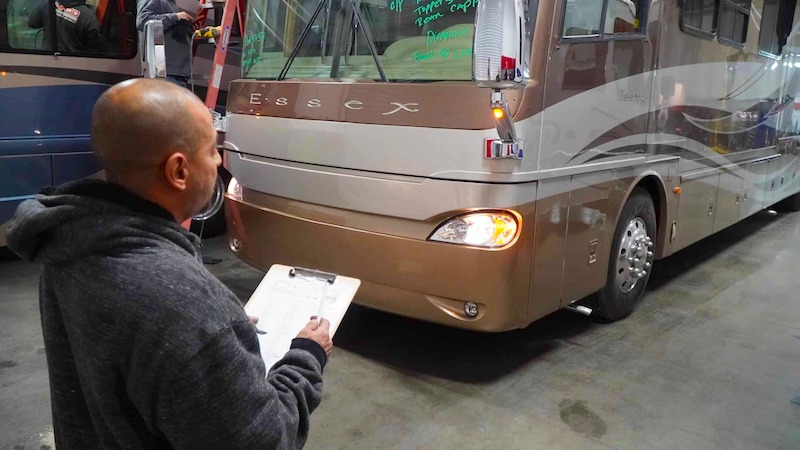
A detailed RV inspection can include a review of the RV’s exterior, roof, interior, appliances, electrical systems, plumbing systems, propane system, heating and cooling, tires, suspension, slide-outs, awnings, and overall condition.
For motorhomes, the inspection may also include engine-related items, drivetrain components, generator operation, fluid checks, mileage, chassis condition, and other automotive systems.
Common areas inspected include:
- Roof membrane, seams, vents, skylights, and sealant
- Sidewalls, delamination, trim, windows, and compartments
- Frame, hitch, suspension, axles, and landing gear
- Tires, wheels, brakes, and visible undercarriage components
- 12-volt and 120-volt electrical systems
- Batteries, converter, inverter, and shore power operation
- Plumbing lines, water pump, water heater, faucets, and tanks
- Propane lines, appliances, furnace, stove, and refrigerator
- Air conditioner, vents, ducting, and thermostat operation
- Slide-outs, seals, toppers, awnings, and leveling systems
- Interior walls, floors, ceilings, cabinets, furniture, and signs of leaks
What Is a Level 1 RV Inspection?
A Level 1 RV inspection is generally a basic inspection. It may include a visual inspection and a test of major systems to make sure they turn on and appear to operate. Some inspectors may also walk the buyer through basic RV operations.
A Level 1 inspection can be useful for lower-priced RVs, smaller travel trailers, or buyers who mainly want an overview. However, it may not be enough for an expensive RV or a buyer who wants a very detailed report.
What Is a Level 2 RV Inspection?
A Level 2 RV inspection is more detailed. It usually includes deeper testing of the RV’s components and systems, more documentation, and a more thorough report.
Level 2 inspectors certified through the National Recreational Vehicle Inspectors Association, or NRVIA, complete hands-on training and testing. Some Level 2 inspections may also include fluid sampling, depending on the RV and the inspection package.
For many used RV buyers, especially those buying a motorhome, fifth wheel, or higher-priced travel trailer, a Level 2 inspection is the better choice.
RV Inspection Red Flags That Should Concern Buyers
Some inspection findings are minor and easy to fix. Others should make you slow down, renegotiate, or walk away.
Major RV inspection red flags include:
- Water damage: Stains, soft floors, ceiling discoloration, mold smells, swollen wood, or damaged wall panels
- Roof neglect: Cracked sealant, damaged roof membrane, loose vents, or signs of long-term leaks
- Delamination: Bubbling or wavy exterior walls that may indicate water intrusion or structural problems
- Old tires: Tires can age out before the tread looks worn, and RV tires are expensive to replace
- Slide-out problems: Uneven movement, damaged seals, water intrusion, or alignment issues
- Electrical issues: Non-working outlets, breaker problems, battery issues, or questionable wiring
- Propane concerns: Leaks, appliance failures, or unsafe modifications
- Poor maintenance: Excessive sealant, temporary repairs, missing service records, or signs the RV sat unused for a long time
One red flag does not always mean you should walk away. But multiple red flags can turn a good-looking RV into a very expensive project.
When an RV Inspection Is Definitely Worth the Cost
An RV inspection is especially worth the cost in these situations:
- You are a first-time RV buyer
- You are buying a used RV
- You are buying from a private seller
- You are buying an older RV
- The RV has been sitting unused
- The RV has slides, a generator, or complex systems
- You are buying a motorhome
- You are spending more than you can comfortably afford to lose
- You are buying out of state or from a distance
- You plan to full-time or part-time RV
In these cases, the inspection is not just another cost. It is part of your buying protection.
When You Might Skip a Professional RV Inspection
There are a few situations where you might skip a professional RV inspection, but you should still inspect the RV carefully yourself.
You might skip a professional inspection if the RV is very inexpensive, you are buying a small simple trailer, you have extensive RV repair experience, or you are intentionally buying a project RV and already know it needs work.
Even then, you should still check the roof, tires, frame, floor, plumbing, electrical system, appliances, and signs of water damage before buying.
Can You Do Your Own RV Inspection?
You can do your own RV inspection, and every buyer should do at least a basic inspection before making an offer. A DIY inspection can help you spot obvious issues and decide whether the RV is even worth paying a professional to inspect.
The advantage of a DIY inspection is that it costs less and helps you learn about the RV. The downside is that you may miss problems a trained inspector would catch.
If you want to understand RV systems better before inspecting an RV yourself, the NRVTA Home Study Course is a helpful resource. We own and use it ourselves, and we recommend it for RVers who want to become more confident with RV systems, maintenance, and troubleshooting. It is not a replacement for a professional inspection on a major purchase, but it can make you a much better-informed buyer.
What If the Inspection Finds Problems?
If the inspection finds problems, that does not automatically mean you should walk away. It means you finally have real information.
You can use the inspection report to:
- Ask the seller to make repairs before purchase
- Renegotiate the price
- Request repair credits
- Decide which repairs are urgent and which can wait
- Walk away if the RV has too many expensive issues
The best inspection reports help you separate small issues from deal-breakers. A loose cabinet latch is not the same as widespread water damage. A missing light cover is not the same as a failing roof.
Should You Consider an RV Warranty or Service Contract After the Inspection?
An RV inspection helps you decide whether to buy the RV. A warranty or extended service contract may help protect you after you own it.
We use and recommend Wholesale Warranties because RV repairs can get expensive quickly, especially on motorhomes and larger RVs with more complex systems. This is not something every buyer needs, and it is not a substitute for buying the right RV in the first place. But after you have inspected the RV and understand its condition, it can be worth looking into coverage options.
The key is to read the terms carefully. Extended service contracts are usually exclusionary, which means you need to know what is not covered. Pay attention to deductibles, covered components, inspection requirements, maintenance requirements, and claim procedures.
For more information, read our article: Protecting Your Travels with RV Warranties.
Do You Need an RV Inspection to Get an RV Loan?
Some lenders may require an inspection or appraisal for a used RV, especially with private-party purchases. Requirements can vary by lender, RV age, RV value, loan amount, and whether the RV is a motorhome or towable.
If you plan to finance the RV, ask the lender early whether they require an inspection, appraisal, photos, title documentation, mileage verification, or proof of value. It is better to know before you are deep into negotiations.
How Do You Find a Certified RV Inspector?
One of the best places to find a certified RV inspector is through the National Recreational Vehicle Inspectors Association, or NRVIA. Their inspector locator can help you find trained inspectors in your area.
You can also ask local RV dealerships, RV service centers, mobile RV technicians, campground owners, or other RVers for recommendations. Just remember that a friend who has owned RVs for years is not the same as a certified inspector with a formal checklist, tools, and report process.
Before hiring an inspector, ask:
- Are you certified?
- What level of inspection do you perform?
- What systems are included?
- Will I receive a written report with photos?
- Do you inspect roofs, slide-outs, appliances, propane, electrical, plumbing, and tires?
- Do you offer fluid analysis for motorhomes?
- How long will the inspection take?
- Can I be present during the inspection?
RV Inspection Checklist for Buyers
Whether you hire a professional or do your own first walkthrough, use a checklist. A checklist helps you slow down and inspect the RV instead of getting caught up in the excitement of buying it.
At minimum, check these areas:
- Roof condition and sealant
- Exterior walls and signs of delamination
- Windows, doors, storage compartments, and seals
- Tires, date codes, wheels, and visible suspension parts
- Frame, hitch, pin box, or motorhome chassis
- Floor soft spots and ceiling stains
- Plumbing leaks and water pump operation
- Water heater, furnace, refrigerator, stove, and air conditioner
- Electrical outlets, lights, batteries, and shore power
- Slide-outs, awnings, leveling systems, and stabilizers
- Holding tanks, valves, and sewer connections
- Signs of rodents, mold, odors, or poor maintenance
If anything feels wrong, slow down. Do not let the seller rush you. A serious RV purchase deserves a careful inspection.
Final Thoughts: Is an RV Inspection Worth the Cost?
An RV inspection is worth the cost for most buyers because it can help you avoid expensive surprises, negotiate better, and buy with more confidence.
This is especially true if you are a first-time buyer, buying used, buying from a private seller, or purchasing a larger RV with complex systems. A clean RV can still have hidden problems, and a professional inspection gives you a better chance of finding them before they become yours.
The goal is not to find a perfect RV. Every RV will need maintenance. The goal is to know what you are buying so you can decide whether it is the right RV at the right price.
Related Reading:
1️⃣ Protecting Your Travels with RV Warranties
2️⃣ How to Become a Certified RV Service Technician
3️⃣ Is The Good Sam Extended Service Plan Right For You?
4️⃣ Best RV Video Training Courses for Beginners
5️⃣ 7 Tips for Saving Money on Mobile RV Repairs
Mike Scarpignato – Bio
Mike Scarpignato founded RVBlogger.com with his wife, Susan, in 2018 to help new and experienced RVers make better decisions about buying, owning, and traveling in an RV.
Mike has decades of camping experience and has traveled extensively in both a Gulf Stream Conquest Class C and a Thor Challenger Class A motorhome. He and Susan spend much of the year on the road, attend RV shows, visit dealerships, and tour RVs across the country.
Through RVBlogger.com and the RVBlogger YouTube channel, Mike shares practical, first-hand advice about RV buying, floor plans, ownership, maintenance, gear, campgrounds, and the RV lifestyle.

Good info in this article. One note to update: the NRVIA Certified Inspector Training is TWO WEEKS long after a 5-day RV Fundamentals course. Keep up the great work guys! Love your stuff.
We used NRVIA buying a 5th wheel in California, while based in Texas. Had them go out, and the inspector found a few things to give us a heads up for, as well as allowing us to negotiate, basically making his services free. But having had that peace of mind was well worth it, even if we hadn’t been able to negotiate.