
Thanks for your support! If you make a purchase using our links in this article, we may make a commission. And, as an Amazon Associate, I earn from qualifying purchases. See the full disclosure here.
Published February 1, 2022 | Last updated October 27, 2026
Our current Class A has a tankless water heater, so this is one of those winter-storage details I do not take lightly.
Even though a tankless RV water heater does not hold six or ten gallons of water like a traditional heater, it still contains water in the heat exchanger and plumbing. If that water freezes, the damage can get expensive fast.
The big mistake is assuming every tankless RV water heater is winterized the same way.
It is not.
Some manufacturers allow compressed air. Some allow RV antifreeze through the heater. Some want the heater drained and bypassed instead.
So the safest rule is simple: winterize the entire RV plumbing system, but follow the instructions for your exact water-heater brand and model before using compressed air or antifreeze.
Do You Need to Winterize a Tankless RV Water Heater?
Yes.
Tankless does not mean waterless.
There can still be water inside the heat exchanger, filters, valves, and plumbing connections. If the RV is exposed to freezing temperatures and that water is trapped inside, it can freeze and expand.
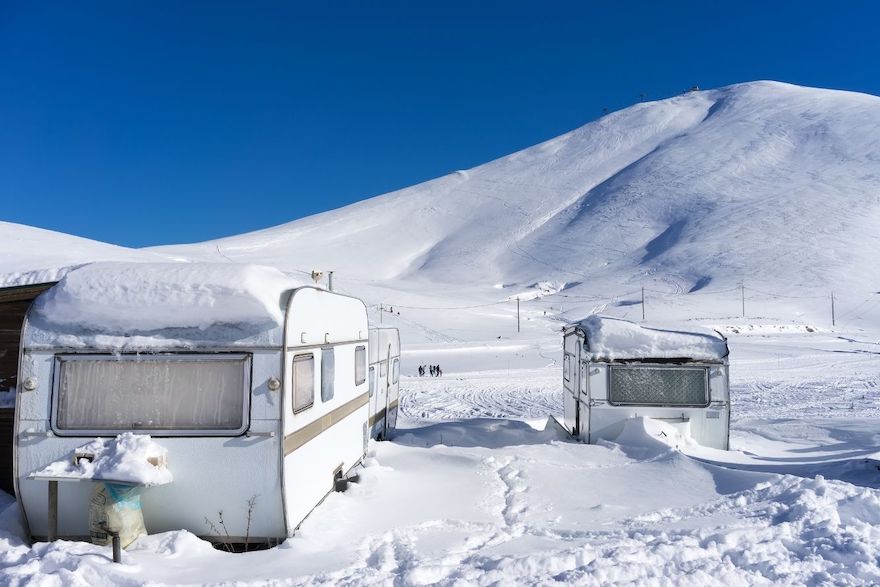
That can damage the heater or the plumbing around it.
If the RV will be stored where freezing temperatures are possible, I would winterize it.
Do Not Assume the Built-In Freeze Protection Is Enough
Some tankless RV water heaters advertise freeze protection or an antifreeze mode.
That can be useful while you are actively using the RV in cold weather, but it is not the same thing as winterizing the RV for storage.
Those systems may depend on 12-volt power, propane, water pressure, or a specific operating mode.
If the power fails, the propane is shut off, or the system is not configured exactly as required, the protection may not work.
I would never rely on a built-in freeze-protection feature as my only plan for winter storage.
How to Winterize a Tankless RV Water Heater Safely
The exact procedure depends on the heater, but this is the general process I would follow before touching anything:
1. Identify the exact water-heater brand and model.
Do not stop at “Girard,” “Furrion,” or “Truma.” Find the model number.
2. Read the winterization section of that model’s manual.
This is the most important step because the procedures are not interchangeable.
3. Turn off the heater and let it cool.
Shut off propane or power as required by the manufacturer before draining or winterizing.
4. Shut off the water supply and depressurize the plumbing.
Disconnect city water, turn off the pump, and open faucets as directed.
5. Drain the RV plumbing system and water heater according to the manual.
Depending on the heater, this may involve removing a drain plug, opening a drain lever, removing a filter, or blowing water out of the system.
6. Use compressed air or RV antifreeze only if your manufacturer allows it.
This is where the brand-specific instructions matter most.
How to Winterize a Girard Tankless RV Water Heater
Current Girard guidance allows either of the two common RV winterization methods.
You can drain the RV plumbing system and use compressed air to purge remaining water, or follow the RV manufacturer’s procedure and fill the system with non-toxic RV antifreeze.
Girard also says the small amount of water inside the heat exchanger does not require a bypass kit for winterization.
If you have a Girard model with freeze protection, do not assume that feature replaces winterization while the RV is stored. Girard’s own guidance says the heater still needs to be winterized when the RV is not in use or is in storage.
My advice: use the procedure in the manual for your exact Girard model, especially if your RV plumbing has been modified or includes bypass valves.
How to Winterize a Furrion Tankless RV Water Heater
Furrion also allows compressed air or RV antifreeze, but the details matter.
Current Furrion instructions say to drain the heater and plumbing system and, if using compressed air, not to exceed the pressure limit listed for the unit.
Furrion also allows non-toxic RV antifreeze to be used directly in the heater. Some models can be bypassed instead, but the heater still needs to be evacuated properly before bypassing it.
Some Furrion models also have antifreeze protection for cold-weather operation.
Again, I would not treat that as a substitute for winterizing an RV that is going into storage.
How to Winterize a Truma AquaGo
Truma is a good example of why you should not use one generic procedure for every tankless heater.
Truma says the AquaGo can be winterized by draining it through the Easy Drain Lever and removing the filter cartridge.
Truma specifically says it does not recommend high-pressure air or antifreeze solutions through the AquaGo during normal winterization.
If antifreeze is used in the RV plumbing, Truma says the AquaGo should be handled according to the proper bypass procedure for the installation.
That is a very different process from a Girard or Furrion heater.
What About Camplux RV Tankless Water Heaters?
Camplux sells both built-in RV water heaters and portable water heaters, so I would be especially careful about using the correct manual.
The current built-in RV models have separate winterization instructions from the portable camping models.
Camplux also notes that built-in freeze protection does not replace winterization during storage, power loss, or extended freezing conditions.
If you have a Camplux, confirm the exact model number before following any winterization procedure you find online.
Can You Put RV Antifreeze Through a Tankless Water Heater?
Sometimes.
That is the answer I trust.
Girard and Furrion provide winterization procedures that allow non-toxic RV antifreeze through certain tankless heaters.
Truma AquaGo guidance is different and normally relies on draining the unit rather than pumping antifreeze through it.
So I would never tell someone, “Yes, just run antifreeze through every tankless heater.”
Check the exact model first.
Can You Blow Out a Tankless RV Water Heater With Compressed Air?
Again, it depends on the heater.
Girard and Furrion publish procedures that use compressed air.
Truma AquaGo specifically warns against using high-pressure air for its normal winterization process.
If compressed air is allowed for your model, use the pressure specified by the manufacturer. Do not guess.
How to De-Winterize a Tankless RV Water Heater
Spring startup also depends on the model, but the goal is straightforward.
Restore any drain plugs, filters, or cartridges that were removed for storage.
Return bypass valves to the operating position if your system uses them.
Flush the plumbing thoroughly with fresh water until all RV antifreeze is gone.
Then follow the heater manufacturer’s startup procedure before turning the appliance back on.
I would not energize the heater until I knew the plumbing was full, pressurized, and ready for normal operation.
The Mistakes I Would Avoid
Assuming tankless means it cannot freeze.
Assuming built-in freeze protection replaces winterization.
Pumping antifreeze through the heater without checking the manual.
Using compressed air at a pressure the manufacturer does not allow.
Following instructions for the wrong model.
Forgetting to reinstall filters, drain plugs, or bypass valves correctly in the spring.
My Bottom Line
Yes, you need to winterize a tankless RV water heater if the RV will be exposed to freezing temperatures.
But there is no single winterization procedure that is safe for every tankless heater.
Girard, Furrion, Truma, and Camplux all handle winterization a little differently.
My rule is simple: identify the exact model, read that manual, and follow the manufacturer’s procedure before using compressed air or antifreeze.
A few extra minutes checking the manual is a lot cheaper than replacing a frozen water heater in the spring.
Related Reading:
Fall RV Maintenance Checklist Before Winter Storage
Do You Have to Winterize an RV?
How Cold Does It Have to Get Before RV Pipes and Tanks Freeze?
Do Tankless RV Water Heaters Provide Endless Hot Water?
Mike Scarpignato – Bio
Mike Scarpignato founded RVBlogger.com with his wife, Susan, in 2018 to help new and experienced RVers make better decisions about buying, owning, and traveling in an RV.
Mike has decades of camping experience and has traveled extensively in both a Gulf Stream Conquest Class C and a Thor Challenger Class A motorhome. He and Susan spend much of the year on the road, attend RV shows, visit dealerships, and tour RVs across the country.
Through RVBlogger.com and the RVBlogger YouTube channel, Mike shares practical, first-hand advice about RV buying, floor plans, ownership, maintenance, gear, campgrounds, and the RV lifestyle.

We have a GIRARD GSWH-2. The Girard manual says nothing about recommending using the antifreeze method. The manual says use one of two method: the compressed air method or the anti-freeze method. THis tankless water heater also does not have a drain plug