
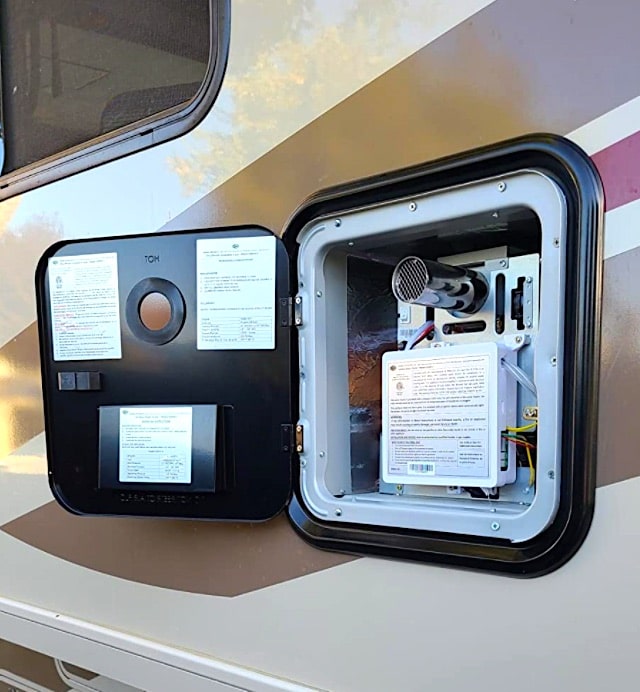
Thanks for your support! If you make a purchase using our links in this article, we may make a commission. And, as an Amazon Associate, I earn from qualifying purchases. See the full disclosure here.
Updated September 29, 2025
When Susan and I first heard about RV tankless water heaters, we loved the idea—endless hot water in the RV sounded like pure luxury. But the truth is, while these heaters do provide continuous hot water, there are a few important details every RVer should know before spending $500–$1,000 on one.
In this article, I’ll share what we’ve learned, what makes them great, when they may not be the best fit, and which brands are worth considering.
Do Tankless RV Water Heaters Always Deliver Hot Water?
Yes, tankless RV water heaters live up to their reputation for endless hot water. They work by running cold water through a heated pipe system. As the water moves through, the heat source warms it up, so by the time it reaches your sink, shower, or washing machine, it’s hot and ready to use.
Most models come with a wireless controller you can mount inside your RV to set a preferred water temperature. The key is to find a setting you and your camping partner can both live with—because adjusting it while water is flowing isn’t always possible.
I’ll never forget the first time I tested a tankless system at a campground in North Carolina. After years of “Navy showers” with a 6-gallon tank, I stood under hot water for 15 minutes straight. It felt amazing—but I quickly realized my grey tank was filling up faster than I expected. Endless hot water doesn’t mean endless drainage!
Three Reasons a Tankless RV Water Heater Is Worth It
Tankless water heaters aren’t perfect for every situation, but for many RVers—especially full-timers—they can be a game-changer.
1. They Provide the Best Return on Investment
Full-time and seasonal RVers benefit the most. Unlike traditional tank heaters that keep water hot around the clock, tankless units only use energy when you turn on the faucet. Over time, that means significant energy savings, especially at campgrounds with metered electricity.
2. They Help Reduce RV Weight
Weight is a big deal in the RV world. Water is heavy—about 8.34 pounds per gallon. That means a 6-gallon tank adds more than 50 pounds, while a 10-gallon tank adds over 83 pounds. By switching to tankless, you free up that weight for other essentials (or just reduce the strain on your rig).
Susan and I once swapped a traditional heater for a tankless in our travel trailer, and we immediately noticed a difference in towing performance—our truck had a little extra pep on the hills.
3. They Offer Strong Water Flow
Tankless RV water heaters typically deliver around 6 gallons per minute (GPM), with models ranging from 4–10 GPM. That’s plenty for showers, sinks, or even dishwashers. Just remember—you need to open the faucet enough to trigger the heater.
Appliance averages:
- Kitchen or bathroom sink: 1–2 GPM
- Dishwasher: 2–4 GPM
- Shower: 1.5–3 GPM
- Washing machine: 3–5 GPM
Like many RVers, we’ve had the dreaded “shower shock” moment when someone flushes the toilet and suddenly the water temperature goes haywire. With a little planning—like running the dishwasher at night—you can avoid overloading the system and keep things comfortable.
Is It Easy to Replace a Tank RV Water Heater With Tankless?
Replacing isn’t always straightforward. Tankless models are usually smaller, so you may need to add braces to secure them. Some also don’t come with exterior doors, and since there’s no universal sizing in the RV industry, finding a matching replacement door can be tricky.
Still, many RVers (ourselves included) feel the effort is worth it. Tankless units often last up to 20 years compared to 10–15 for tank models.
You can check out this video below to get a good idea about how easy it is to replace a water heater in an RV.
Electric vs. Propane RV Tankless Water Heaters
Which is better? That depends on how you camp.
Electric Tankless Water Heaters
- About 95% efficient
- Solar system friendly (great for boondockers)
- Altitude neutral (no propane combustion issues)
- Typically smaller GPM models
- Installation is simpler (no gas line)
Propane Tankless Water Heaters
- Heat water faster with higher GPM models
- About 85% efficient, though condensing models reuse exhaust heat
- Great for RVers who want instant, high-volume hot water
- Still use an electric ignition device, so no wasted fuel with a pilot light
RVBlogger Pro Tip: If your propane burner isn’t working properly, it could create carbon monoxide. If your CO alarm ever goes off, shut everything down immediately and get it checked by a qualified RV service tech. Safety first!
Portable Tankless Water Heaters – Perfect for Outdoor Showers
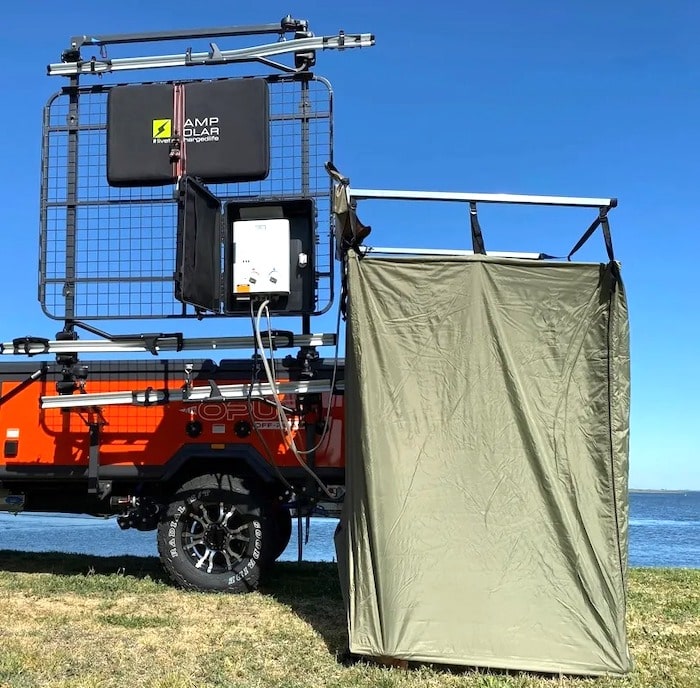
Even if you don’t own a big motorhome, you can enjoy hot water with portable tankless systems. Teardrop campers, rooftop tent campers, and vanlifers love these compact devices. Many run on propane or batteries and connect to your RV’s water system.
Susan and I once camped with friends using an Opus Camper OP4 Pop-Up with a portable Eccotemp heater. After a long day of hiking, rinsing off under a warm outdoor shower felt like luxury in the middle of the woods.
Pros and Cons of RV Tankless Water Heaters
Pros:
- Endless hot water (within reason!)
- More energy-efficient
- Lighter weight than tank heaters
- Smaller and space-saving
- Longer lifespan
- Can keep up with multiple faucets in larger models
Cons:
- Higher upfront cost
- Complicated installation
- Impacted by campground water pressure
- Grey tanks can fill fast with long showers
- Not always worth it for weekenders or part-timers
- Matching exterior doors can be tricky
Best RV Tankless Water Heater Brands
Here are some of the most trusted names in RV tankless water heaters:
- Eccotemp – Affordable, portable options great for smaller RVs or outdoor use.
- Fogatti – Reliable technology, also sold under RecPro branding.
- Furrion – Known for durable propane models with user-friendly controls.
- Girard – Pioneers of RV tankless water heaters, with efficient and green designs.
- Suburban – A long-standing RV brand with propane and electric tankless models.
Conclusion: Should You Upgrade to a Tankless RV Water Heater?
The short answer: it depends on your RV lifestyle. Full-timers and seasonal campers will love the energy savings and endless hot showers. Weekend warriors may not find it worth the investment.
Some RVs now come with tankless water heaters straight from the factory, while others offer them as upgrades. If you’re considering the switch, think about how often you camp, how long your showers usually are, and whether your grey tank can handle the extra water use.
At the end of the day, Susan and I love having the convenience of endless hot water. But like everything in RV life, it’s about finding the right balance between comfort, cost, and practicality.
So—can an RV have a tankless water heater? Absolutely. Should yours? That’s up to you, your camping style, and how much you value a long, hot shower at the end of the day.
Related Reading:
– How to Winterize a Tankless RV Water Heater
– How Much Does an RV Water Heater Cost?
– RV Water Heater Not Getting Hot Enough!
– How to Remove the Plastic Taste from Your RV Water
Mike Scarpignato – Bio
Mike Scarpignato founded RVBlogger.com with his wife, Susan, in 2018 to help new and experienced RVers make better decisions about buying, owning, and traveling in an RV.
Mike has decades of camping experience and has traveled extensively in both a Gulf Stream Conquest Class C and a Thor Challenger Class A motorhome. He and Susan spend much of the year on the road, attend RV shows, visit dealerships, and tour RVs across the country.
Through RVBlogger.com and the RVBlogger YouTube channel, Mike shares practical, first-hand advice about RV buying, floor plans, ownership, maintenance, gear, campgrounds, and the RV lifestyle.

We bought the Girard in 2020. Wouldn’t be without it now. Ranks up there with our composting toilet. 2 must haves for fulltimers.